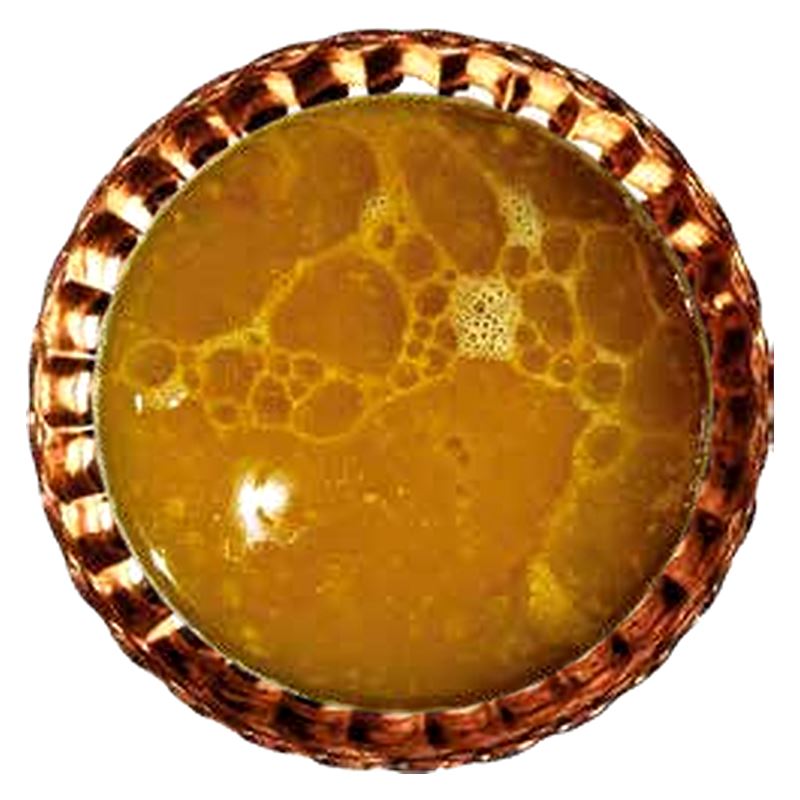
What is ash-e jo, and why do Iranians love it in winter?
Ash-e jo (Persian: آش جو) is a thick, creamy Persian barley pottage. Ash is the broad family of hearty Iranian soups, and jo simply means barley. Pearl barley is simmered slowly with sautéed onion and turmeric until it swells and turns silky, then a mountain of chopped herbs — parsley, coriander, dill and spinach — melts into it. It is finished with a swirl of kashk (fermented whey) or a little cream, and crowned with three fried toppings: minted oil, golden onion and garlic. Comforting, filling and gently tangy, it is a fixture of Iranian winters, of charity (nazri) pots, and of restaurant menus alike. This is a home recipe you can absolutely master in a Dubai kitchen.
Is ash-e jo the same as barley soup?
Not quite. A Western barley soup is usually thin and brothy; ash-e jo is a pottage — thick enough to coat the spoon, closer to a loose porridge than a soup. The herbs are used by the bunch, not the sprig, and the finish with kashk and fried garnishes is what makes it unmistakably Persian. If you want to see where ash sits in the wider world of Iranian cooking, our guide to Persian food beyond kalle pache is a good map.
What ingredients do you need for ash-e jo?
This makes a generous pot for about six people. Chop everything small and even — ash is eaten by the spoonful, not the forkful.
- 3/4 cup (about 150 g) pearl barley, rinsed
- 2 large onions (one for the ash, one for the fried-onion garnish)
- 3 tablespoons oil or butter, plus more for the garnishes
- 1 teaspoon ground turmeric
- 1 large bunch parsley (about 100 g), finely chopped
- 1 large bunch coriander/cilantro (about 100 g), finely chopped
- 1 small bunch dill (about 50 g), finely chopped
- 200 g spinach, chopped
- 2 tablespoons dried mint, for the mint oil
- 1 whole head of garlic
- 1/2 cup kashk (or a substitute — see below), plus extra to drizzle
- Optional: 1/4 cup lentils or a handful of cooked white beans for extra body
- Optional: 1 carrot, grated
- About 8 cups (2 litres) water or light stock
- Salt and black pepper
How do you make ash-e jo, step by step?
- Soak the barley if you have time. Rinse the barley and soak it for 30–60 minutes; this shortens the simmer and gives a creamier ash.
- Fry the base onion. Finely chop one onion and cook it in 3 tablespoons oil over medium heat until soft and golden, about 8–10 minutes. Stir in the turmeric and cook 1 minute more.
- Add the barley. Drain the barley, add it and stir for 1–2 minutes to coat, then pour in the water or stock and the lentils if using. Bring to a boil, reduce to a gentle simmer, partly cover, and cook 45–60 minutes, stirring now and then so the barley does not catch, until it is plump and soft and the liquid has thickened.
- Add the herbs and spinach. Stir in the parsley, coriander, dill and spinach (and carrot, if using). Simmer another 30–40 minutes uncovered, stirring, until it is dark, thick and creamy. Season generously with salt and pepper, and add hot water if it thickens too far — it should fall heavily from the spoon, not stand in a mound.
- Make the fried onion (piaz dagh). Slice the second onion thinly and fry it slowly in oil until deep golden and crisp, then drain it.
- Make the fried garlic (sir dagh). Gently fry minced or sliced garlic in oil with a pinch of turmeric until just golden — do not let it brown, or it turns bitter.
- Make the mint oil (na'na dagh). Warm a few tablespoons of oil, take it off the heat, then stir in the dried mint for a few seconds until fragrant. Off the heat is essential — mint scorches in an instant.
- Finish with kashk. Stir most of the kashk into the ash over low heat and warm it through without a hard boil (a rolling boil can split kashk and turn it bitter). Taste and adjust the salt.
- Serve. Ladle into bowls, drizzle over extra kashk, then spoon on the na'na dagh, piaz dagh and sir dagh. Eat hot with warm bread.
What are the three fried garnishes?
| Topping | Persian | How to make it | Watch out for |
|---|---|---|---|
| Na'na dagh (mint oil) | نعناع داغ | Dried mint bloomed in warm oil, off the heat | Burns in seconds — never over direct heat |
| Piaz dagh (fried onion) | پیاز داغ | Onion sliced thin and fried slowly to deep golden | Rushing it on high heat makes it bitter, not sweet |
| Sir dagh (fried garlic) | سیر داغ | Garlic fried gently to pale gold | Lift it out while still light — it keeps cooking in its heat |
Kashk or cream, and how do you keep it vegan?
Kashk is a strained, fermented dairy product — thick and tangy, and the thing that gives ash-e jo its distinctive depth. You will find liquid kashk in jars at Iranian and Middle-Eastern shops around Dubai, or dried kashk that you reconstitute with water to a pouring-cream consistency. The dish is already suitable for dairy-eating vegetarians; to make it fully vegan, skip the kashk and finish with a little unsweetened plant cream plus a squeeze of lemon or some abghooreh (verjuice) for the tang.
What are the common mistakes?
The usual ones: burning the garlic or mint so they turn bitter — cook them gently and always bloom the mint off the heat; the barley catching on the base — stir now and then and use a heavy pot; and boiling the kashk too hard so it splits — warm it in only at the end, over low heat.
Is ash-e jo healthy?
Barley brings dietary fibre (including beta-glucan), the herbs and spinach add colour and freshness, and the bowl is warming and filling in the cold. This is general information, not medical advice; for any diet or health condition, please consult a doctor or dietitian.
Would you rather not cook today?
Making ash-e jo is a slow pleasure worth the afternoon, but it is a home dish — we do not cook it or serve it. If you would rather not stand over the stove, a bowl of slow-simmered kalle pache with warm sangak is a tap away on our menu and order page, delivered across Dubai around the clock and free over AED 300. A cold glass of doogh alongside cuts the richness — here is how to make doogh at home. Or reserve a table at our Jumeirah 1 kitchen.
