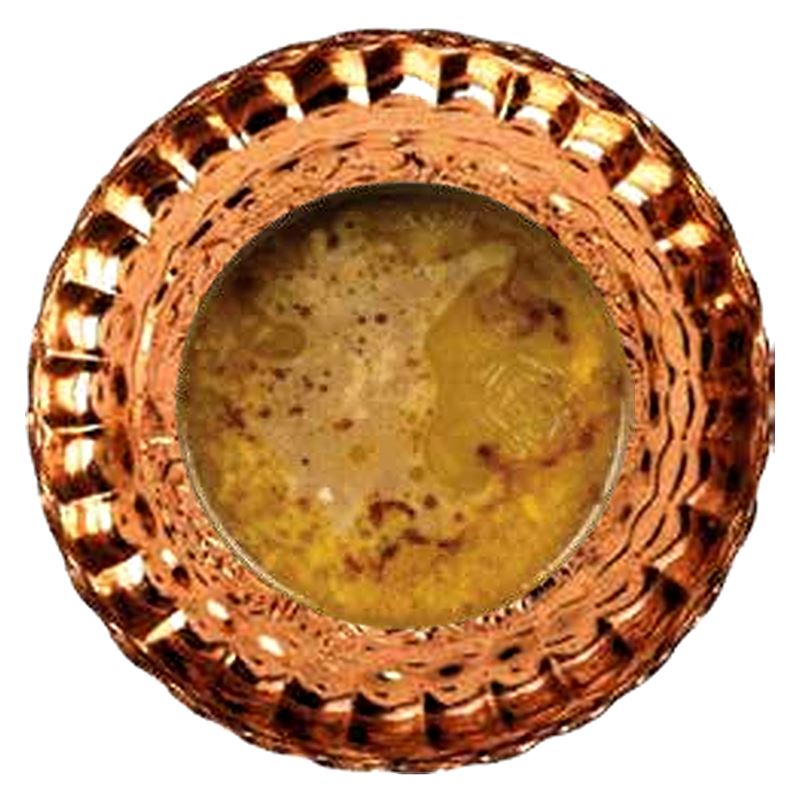
What is ash reshteh, and why do Iranians make it for special occasions?
Ash reshteh (Persian آش رشته) is Iran's most famous ash — a category of thick, herb-heavy soups closer to a pottage than a broth. This one is built on mixed beans, chickpeas and lentils, an almost absurd quantity of fresh green herbs, and flat reshteh noodles, then finished with tangy kashk and a trio of fried garnishes. It is hearty, sour-savoury and deeply green. More than a meal, it is a communal ritual: a huge pot made to be shared at Nowruz, at family gatherings, and often cooked and given away as nazri (votive food) during religious months.
Why is it called the knot-opening soup?
The word reshteh means "thread" or "strand." Eating the threads is said to help you take hold of the strand of your wish and untangle the knots in front of you, which is why ash reshteh is traditionally cooked when someone starts a new job, sets out on a journey, or simply hopes for a turn of luck. It is comfort food and good-luck charm in one bowl — and we will say up front that we do not make it in our kitchen, but there is real pleasure in cooking it yourself.
What ingredients do you need to make ash reshteh?
This makes a large pot, enough for six to eight people — which is how ash reshteh is meant to be made. Wash and chop the herbs finely; they are the soul of the dish, not a garnish.
- 1/2 cup (about 100 g) dried chickpeas, soaked overnight
- 1/2 cup (about 100 g) dried red kidney beans, soaked overnight
- 1/2 cup (about 100 g) dried white or pinto beans, soaked overnight
- 1/2 cup (about 100 g) green or brown lentils (no soaking needed)
- 200 g parsley, finely chopped
- 200 g coriander (cilantro), finely chopped
- 300 g spinach, finely chopped
- 100 g dill, finely chopped
- 150 g Persian chives or garlic chives (tareh), if you can find them
- 250 g reshteh (Persian flat noodles)
- 1 cup (about 240 g) kashk, plus extra to serve
- 3 large onions
- 1 whole head of garlic
- 3–4 tablespoons dried mint
- 1 teaspoon ground turmeric
- About 1/2 cup cooking oil (for the base and the garnishes)
- Salt and black pepper
- 2–3 litres water, added gradually
For equipment you need one large, heavy-based pot of at least five litres, a small frying pan for the garnishes, and a colander. Nothing specialised — just a big pot and a free afternoon.
Which beans go into ash reshteh?
- Chickpeas (nokhod): soak overnight, then cook about 1–1.5 hours.
- Red kidney beans (lubia ghermez): soak overnight, then cook about 1–1.5 hours.
- White or pinto beans (lubia sefid): soak overnight, then cook about 1–1.5 hours.
- Green or brown lentils (adas): no soaking needed; cook about 25–30 minutes.
How do you make ash reshteh, step by step?
- Soak the beans the night before. Put the chickpeas, kidney beans and white/pinto beans in a bowl, cover generously with water and leave 8 hours or overnight. Drain and rinse. Skip this and the beans will never turn tender in time.
- Start the bean base. In the large pot, warm 2 tablespoons of oil and fry one chopped onion until golden. Stir in the turmeric, then add the drained beans and about 2 litres of water. Bring to a boil, skim off any foam, then simmer partly covered for 1 to 1.5 hours, until the beans are almost tender.
- Add the lentils. Stir in the lentils and cook another 25–30 minutes. They cook faster than the beans, which is exactly why they go in later.
- Add the herbs. Add all the chopped herbs and spinach with a little more hot water. Simmer 30–45 minutes; the ash will darken and the raw-herb smell will mellow into something deep and savoury.
- Fry the garnishes now (see the next section) while the herbs simmer.
- Add the noodles. Break the reshteh into roughly 10 cm lengths and stir into the simmering ash. Cook 10–15 minutes, stirring now and then so they do not clump or catch on the bottom. The noodles release starch and thicken the whole pot.
- Stir in the kashk. Bring the kashk to a brief simmer (see the note below), then stir most of it into the ash and cook 5 more minutes. Reserve some for drizzling.
- Season and adjust. Taste for salt and pepper. Ash reshteh should be thick but still pourable from the ladle — loosen with hot water if it has gone stiff.
- Serve. Ladle into bowls and finish each with a swirl of reserved kashk, a spoon of fried mint, a scatter of fried onion and a little fried garlic.
How do you make the three fried garnishes?
The finish is not optional — it is what makes the bowl taste like ash reshteh rather than green bean soup. Piyaz dagh (fried onion): thinly slice two onions and fry slowly in oil for 15–20 minutes until deep golden and crisp; patience here gives the sweet, dark colour. Sir dagh (fried garlic): thinly slice the garlic and fry gently until just golden — it burns in seconds, so watch it closely. Na'na dagh (fried mint): take the pan off the heat, let the oil cool for a moment, then stir the dried mint in for only 10–15 seconds. Burnt mint turns bitter, so treat it gently.
What is kashk, and how do you use it safely?
Kashk is a traditional fermented whey — the tangy, creamy backbone of ash reshteh. It comes two ways: thick liquid in jars, or hard dried balls you soak and blend with water. Either way, bring the kashk to a brief simmer, on its own or stirred into the hot ash, before serving. Traditional cooks always boil it first, both for a smoother, rounder taste and for safety. Stir most of it into the pot, and keep a little back, thinned with a spoon of water, to swirl over each bowl so it looks the part.
How long does ash reshteh take, and how hard is it really?
Be honest with yourself before you start. Ash reshteh is not technically difficult — there is no tricky technique — but it is long and hands-on. Between the overnight soak, an hour or more of simmering beans, mountains of herbs to wash and chop, and three separate garnishes to fry, you are looking at the best part of an afternoon. None of the individual steps are hard; it is the scale and the patience. That is precisely why, in Iran, it is a soup for a crowd: you make one huge pot, and everyone shares it.
No time to simmer for hours?
Ash reshteh is a labour of love, and we will not pretend otherwise — it is not on our menu. But if what you are really craving is that slow-simmered, bean-rich Persian comfort, our abgoosht (dizi) hits a similar note: lamb, chickpeas and white beans cooked down for hours and served the traditional way to mash at the table. And if it is deep, restorative Persian soul food you want, our Tehran-style kalle pache is the original. You can order either across Dubai, 24 hours a day, with warm sangak and cold doogh on the side, from the menu and order page — delivery is free over AED 300. Prefer to gather around a table, the way ash reshteh is meant to be eaten? You can also reserve a table at our Jumeirah 1 kitchen.
