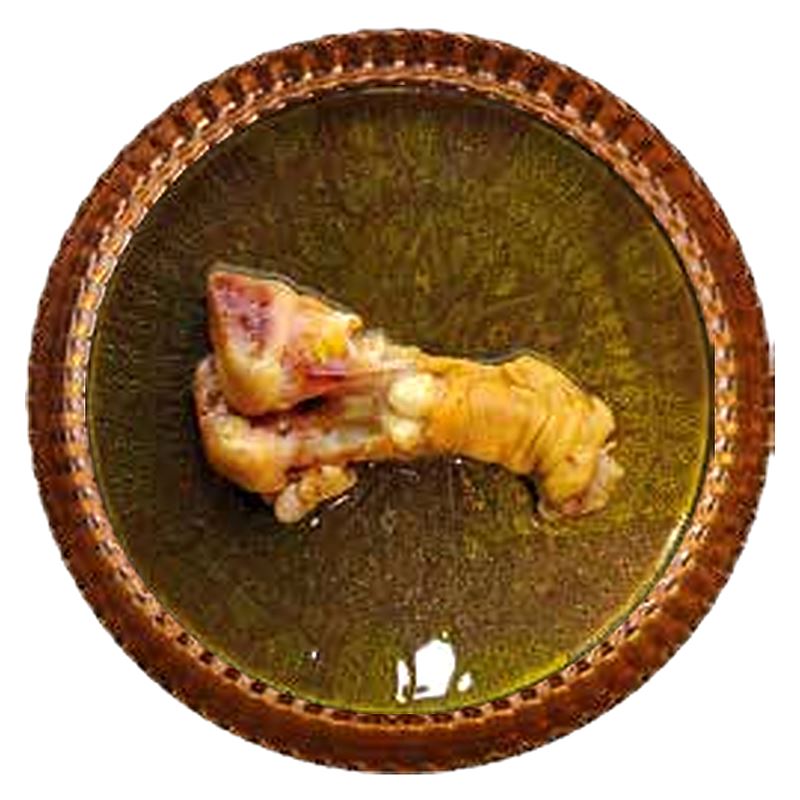
What is paye and why is it worth cooking?
Paye («پاچه» in Persian) is lamb trotters — the feet — slowly simmered into a silky, gelatin-rich broth. It is the gentler, lighter cousin of full kalle pache, which also includes the head, brain, tongue and cheek. Trotters are almost entirely skin, tendon and cartilage wrapped around small bones, and that is exactly the point: cooked long and low, all that connective tissue melts into collagen and gelatin, giving the broth its famous body — the kind that turns to jelly when it cools in the fridge. This is why lamb paye is long loved as a warming, hearty dish, traditionally eaten at dawn. It rewards patience far more than skill.
How hard is it to cook lamb trotters at home?
Let us be honest: paye is not difficult, but it is a commitment. There are only a few ingredients and no tricky technique, yet three things catch first-timers out. First, the smell — raw trotters and the first blanch have a strong, mutton-y odour, so you want good ventilation and a bit of nerve. Second, the cleaning, which is fiddly and non-negotiable. Third, the time: a proper pot simmers for eight to twelve hours, skimmed roughly every hour. You will also want a large, heavy pot (a copper or thick-based stockpot is ideal) and a free day at home. None of it is hard; all of it is slow. If that sounds like more than you fancy, we cook it fresh every day and you can simply order it from the menu instead.
What ingredients do you need for paye?
This makes a generous, deeply gelatinous pot for four people.
- 8 lamb trotters (paye), split, cleaned and hair-free — ask your halal butcher to split them
- 2 large onions, peeled and left whole
- 1 whole head of garlic, cloves peeled
- 1 tablespoon ground turmeric
- 1 teaspoon whole black peppercorns
- 1 cinnamon stick (optional)
- 2 dried limes (limoo amani), pierced — optional, for brightness
- Salt, to taste (added late)
- Water, about 3–4 litres, enough to cover generously
- Juice of 1 lemon, to finish
- To serve: warm sangak bread, aged garlic pickle (torshi), and a glass of doogh
How do you clean lamb trotters properly?
This is the step that makes or breaks paye. Any hair or grit left on the trotters will taint the whole pot, so take your time. Hold each trotter over a gas flame, or use a kitchen blowtorch, to singe off every trace of hair, then scrape the scorched skin with a small sharp knife. Scrub under hot running water, paying attention to the cleft of the hoof and around the split bone. Finally, soak the trotters in cold water for two to three hours (overnight is even better), changing the water once or twice to draw out blood and take the edge off the smell before you cook.
How do you cook paye step by step?
Give yourself the day. The hands-on work is small; the waiting and skimming are what matter.
- Singe, scrape and scrub the trotters until they are completely hair-free, then soak in cold water for 2–3 hours, changing the water once or twice.
- Blanch: put the trotters in a large pot, cover with cold water, bring to a rolling boil for about 10 minutes, then tip away that first water and rinse the trotters clean. This one step removes most of the strong smell.
- Return the trotters to a heavy or copper pot. Add the whole onions, peeled garlic, turmeric, peppercorns and the optional cinnamon and dried limes, then cover generously with fresh water.
- Bring slowly to a gentle boil, then drop the heat to the barest simmer — just a lazy bubble now and then.
- Cook low and slow for 8–12 hours. The longer and gentler the simmer, the more collagen dissolves and the silkier the broth becomes.
- Skim the surface every hour, lifting off the grey foam and excess fat so the broth stays clean and clear.
- Top up with hot water (never cold) if the level drops below the trotters, keeping them submerged throughout.
- Season with salt only in the last hour or two, once the broth has concentrated, so it does not turn salty.
- The paye is ready when the skin and tendons are meltingly soft and slide off the little bones, and the broth is rich and slightly sticky on the lips.
- Finish with a squeeze of lemon and serve piping hot with sangak, garlic pickle and doogh.
How do you get a clear, gelatinous broth?
Two habits do all the work. The first is that early blanch-and-discard, which throws away the scummy first water along with the worst of the odour. The second is hourly skimming at a true low simmer: a hard boil emulsifies the fat and clouds the broth, whereas a barely-there simmer lets impurities rise so you can lift them away. Done patiently, the collagen from the trotters gives you a glossy, full-bodied broth that sets to a soft jelly when chilled — the surest sign you have done it right.
Should you cook paye or order it in Dubai?
Cooking paye at home is genuinely satisfying, but it is a full day of work, smell and skimming. If you would rather skip all that, we serve trotters as a single and as part of the full kalle pache, cooked the traditional Tehran way.
| Consideration | Make it at home | Order from Shaun the Sheep |
|---|---|---|
| Total time | 8–12 hours plus cleaning and soaking | Ready when you are |
| The smell | In your kitchen all day | Stays in ours |
| Equipment | Large heavy pot, ventilation, a free day | None needed |
| Result | Very rewarding with patience | Simmered slowly, consistent every day |
We are one kitchen at 64 Jumeira Street, Jumeirah 1, open 24 hours a day with halal lamb and delivery to every area of Dubai (free over AED 300). To taste properly slow-cooked trotters without the all-day effort, browse the menu and order page for paye and full kalle pache, or reserve a table to eat it fresh at dawn. Payment is by secure card online.
