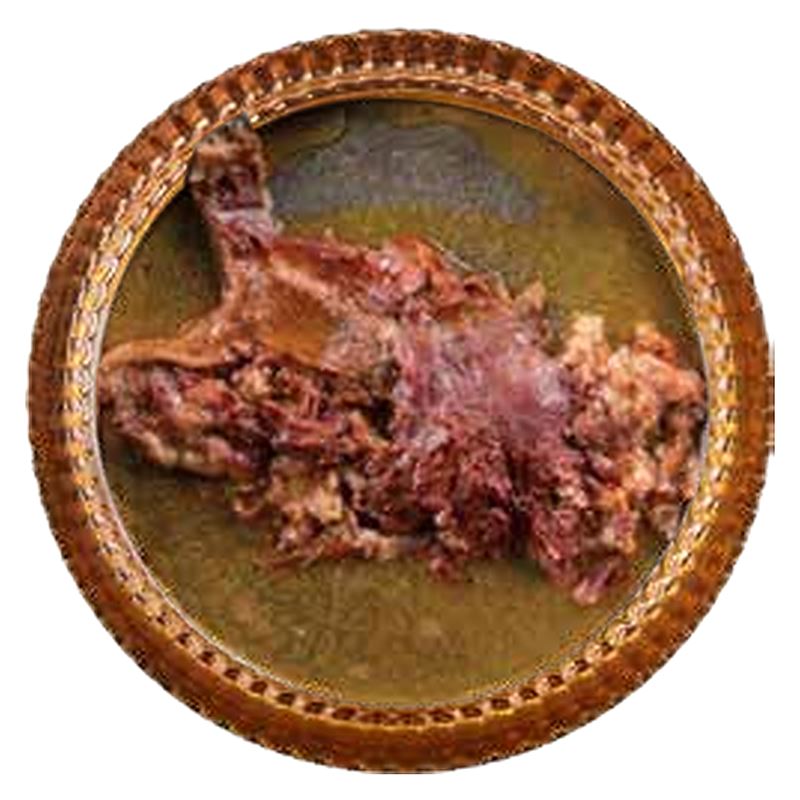
Can you actually make kalle pache at home in Dubai?
Yes, and thousands of Iranian and Arab families do it for special mornings. But before you clear a Friday for it, it helps to know exactly what you are signing up for. Kalle pache, meaning lamb head and trotters, is one of the most rewarding dishes in Persian cooking, and also one of the most demanding. This is an honest, kitchen-level look at what it takes to make it yourself in a Dubai apartment or villa, and when it makes more sense to order a fresh bowl instead.
Where do you even buy a lamb head and trotters?
Start at a traditional butcher rather than a supermarket chiller. Butchers in Deira, Al Quoz, and the older Karama and Satwa lanes will split and prepare a lamb head to order, and most keep trotters (paye) in the back rather than on display. Call ahead: a whole head, four trotters, and sometimes tongue and brain usually need a day's notice. Ask for it cleaned and split, and a good butcher will torch off the wool and hair for you, which saves you the worst job of all. Everything must be halal, which in the UAE is the standard both by law and in practice.
What does hand-cleaning a lamb head really involve?
Even a butcher-prepped head needs serious work at home. You scrub every surface, check the ears and nostrils, and go over the skin with a small flame to catch stray hairs. Trotters get scraped between the toes and along the seams. Then everything soaks, often overnight, with several water changes and a little flour, lemon or vinegar, to draw out blood and any lingering smell. Skip this step and the finished broth turns muddy and strong in the wrong way. It is not difficult, exactly, but it is slow, hands-on, and not for the squeamish.
How long does kalle pache take to cook?
Plan for the better part of a day. The classic method is a low, patient simmer of around fourteen hours, which is why traditional cooks start before dawn so the pot is ready by breakfast. You cannot rush it: the point of the long cook is to turn tough connective tissue, cartilage and marrow into that silky, gelatine-rich broth that sets to a gentle wobble when it cools.
Why does it need a 14-hour simmer and hourly skimming?
Two reasons: extraction and clarity. Hours of gentle heat pull collagen and flavour out of the bones, while the aromatics of onion, turmeric and garlic soften the character of the dish. But as it cooks, foam and fat keep rising to the top. You skim them off by hand, roughly every hour, or the broth stays cloudy and greasy. A heavy copper pot helps, because it spreads heat evenly and holds a steady low temperature over the long haul. Done right, the broth ends up the colour of strong tea, clean and deeply savoury. That is the same method we use in our own kitchen: hand-cleaned before dawn, fourteen hours in copper, skimmed hourly.
What about the smell in an apartment?
This is the part most home cooks underestimate. Fourteen hours of simmering lamb head fills a flat, and it clings, to curtains, sofas, and your neighbours' hallway. In a villa with a garden kitchen or an outdoor gas ring it is manageable. In a tower apartment with shared ventilation, it can genuinely become a problem. If you rent, or you cook in a small open-plan space, this alone is often the deciding factor.
Home-made versus delivered: which is really worth it?
Here is an honest side-by-side of what each route actually costs you, not in dirhams, but in effort, time and result.
| What it takes | Making it at home | Ordering from us |
|---|---|---|
| Sourcing | A day's notice at a traditional butcher; head, trotters, extras | Sourced fresh daily; nothing to plan |
| Prep | Scrub, torch, soak overnight, several water changes | None; hand-cleaned before dawn for you |
| Active time | Hourly skimming across about 14 hours | None; we skim, you just order |
| Total time | Roughly a day and a night | About as long as delivery to your area |
| Equipment | A large heavy or copper pot; a stove free all day | None |
| Smell | Fills an apartment for hours | Stays in our kitchen |
| Result | Great if you nail it; unpredictable first time | Consistent Tehran-style bowl every time |
| Availability | Whenever you can commit a full day | 24 hours a day, 7 days a week |
So should you make it or order it?
Who should try making kalle pache at home?
If you grew up with it, if the ritual is half the pleasure, and if you have a villa kitchen or a well-ventilated space and a free day, do it. There is real joy in skimming a pot at six in the morning and serving a broth you coaxed out of the bones yourself. Enthusiasts, curious cooks with time, and anyone chasing a specific family recipe should absolutely give it a go at least once.
Who should just order a fresh bowl?
If you live in an apartment, if you want it tonight rather than tomorrow, or if you simply want the result without a day at the stove, ordering is the sensible call. We keep one kitchen in Jumeirah 1 and deliver across all of Dubai, so a fresh, Tehran-style bowl is available around the clock. Browse the menu and order page for platters for one to six, or singles like brain, tongue, trotters and lamb cheek. Delivery is free on orders over AED 300, you pick your area at checkout, and you pay securely online. Prefer to sit down to it? You can reserve a table instead.
A note on health: kalle pache is rich, fatty and high in cholesterol. This article is about cooking and flavour, not medical advice. If you are managing your heart, cholesterol, gout or any other condition, please talk to your doctor about how it fits your diet; we cannot make claims about what is safe for you.
Whichever way you go, you are keeping a wonderful tradition alive. And on the mornings you would rather not spend a day at the stove, a fresh bowl is only an order away.
