What is esfand, and what do Iranians actually do with it?
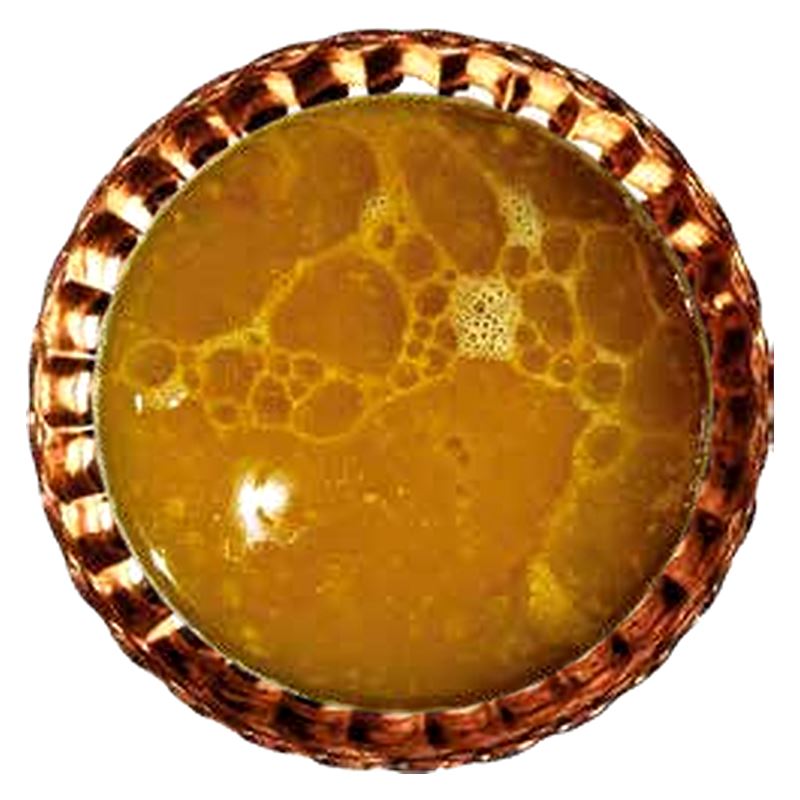
Esfand is the seed of wild rue: small, dark, sold dry by the bag in Iranian grocery shops. A pinch is dropped onto something hot — a coal, a spoon held over a flame, a small burner kept in a drawer for the purpose — and the seeds pop and give off a thin, sharp-smelling smoke. Someone then carries that smoke around a person, or walks it through the rooms of a home, saying a few words out loud while they do it.
That is the whole of it. A seed, some smoke, a phrase, one minute of everyone's attention. It belongs to particular moments rather than to daily life, and those moments are what this is really about.
One thing to be clear about before anything else: this is folk custom. It is something people do. It is not a mechanism, it is not a religious ruling, and nobody is claiming otherwise here.
Which moments call for esfand?
Almost all of them are good news, which surprises people who expect a custom connected to the evil eye to appear when things go badly. It appears when things go well.
- A newborn coming home for the first time.
- A move into a new flat, often on the first evening, before a single box is open.
- A new job, an exam result, a visa, a graduation.
- A wedding — at the henna night, at the family house, at the door.
- Someone leaving on a journey, at the moment the car pulls away.
- Someone back safe — off a long flight, out of hospital, home from a trip that worried people.
The pattern is easy to read once you see it. Esfand belongs to thresholds: a person arriving, a person leaving, a life visibly changing shape in front of everyone who loves them.
What is cheshm-zakhm, and why does it change how people talk?
Cheshm-zakhm — literally eye-wound, and also called cheshm or nazar — is the Persian name for the evil eye. In the folk logic a lot of Iranians grow up around, attention itself carries weight. Good fortune that is looked at too openly, praised too loudly or counted out in public is spoken of as exposed.
You do not have to hold any of this to notice its effects, and the effects are entirely social. They show up in how Iranians hand over good news, and that is the part a non-Iranian in Dubai genuinely bumps into.
Why does an Iranian colleague deflect your compliment?
You tell a colleague their new car is beautiful and they say it is nothing, it is second-hand, the air conditioning is broken. You admire a baby and the grandmother tells you the child never sleeps. You congratulate someone on a new job title and they start talking about the traffic on the way in.
None of that is modesty in the English sense, and none of it is a brush-off. Praise is handled as something that wants softening, so it gets softened: by shrinking the thing, by naming a flaw, by moving the conversation elsewhere. It happens between Iranians often enough that nobody remarks on it.
It sits close to tarof, the ritual back-and-forth of offering and refusing that runs through every Persian room. If the reflex is unfamiliar, our guide to the sofreh, tarof and how a Persian table works shows the same instinct at dinner.
Why does mashallah follow praise?
Because on its own, a compliment sits unfinished. Adding mashallah — or cheshm-e bad dour, which translates roughly as may the bad eye be far — is how the sentence gets closed. It is said fast, without ceremony, the way an English speaker says touch wood and carries on.
The practical version, for anyone living or working alongside Iranians in Dubai: praise something warmly once, then let the subject go. Long, repeated, itemised admiration of a person's child, salary, luck or new home is what makes people shift in their seat. One sincere sentence is plenty, and it is received exactly as you meant it.
Is any of this religious?
People generally describe it as custom rather than observance. Its origins are usually said to be pre-Islamic, and it is kept by households of every level of religious practice and none. We run a restaurant, not a religious authority, so we are not going to tell you what any faith says about it. What we can describe is what people do, which is the question in front of us.
It is a home custom in any case, carried out by families in their own kitchens and doorways.
What does the food on the table have to do with any of this?
This is where the custom meets the part of Iranian life this blog is usually about. The smoke lasts a minute. The meal that follows it is the real event.
In a lot of Iranian families, good news produces a table. The baby comes home and the house fills with people carrying food, because nobody in that household is expected to be cooking — which is why sending food to a friend's home after a birth is such a familiar obligation. The new flat often gets a first meal long before it gets curtains, which is why neighbours turn up with breakfast when someone moves into the building. The traveller who lands safely is usually fed before anyone asks them a single question.
When the news is big enough, the food goes outward rather than inward: a pot cooked and given away to whoever comes, which is the nazri tradition of cooking broth for other people. Gratitude, in a lot of Iranian households, is served rather than announced.
What does that look like in Dubai?
Mostly it looks like a table laid at an awkward hour. Someone lands at three in the morning. Someone finishes a night shift with a result in their pocket. Someone's parents arrive on a dawn flight and the family wants them fed before they are allowed to sleep.
That is the part we can be useful for. The kitchen at 64 Jumeira Street in Jumeirah 1 runs 24 hours, seven days a week, so a homecoming breakfast at four in the morning is an ordinary order rather than a favour. Delivery covers 141 Dubai areas, with the fee for your area shown at checkout; pickup and dine-in both work; and an order can be scheduled for a future hour, which helps when you know when the flight lands but not what anyone will feel like eating. The menu runs from single dishes to shared platters — Special Mix and The Khan's Platter are both on it, with Sangak Bread alongside — and if you are not sure which size fits your group, call 04 321 8882 and ask.
Whether anyone lights a seed first is between them and their grandmother. The menu is here, and the phone is 04 321 8882.
