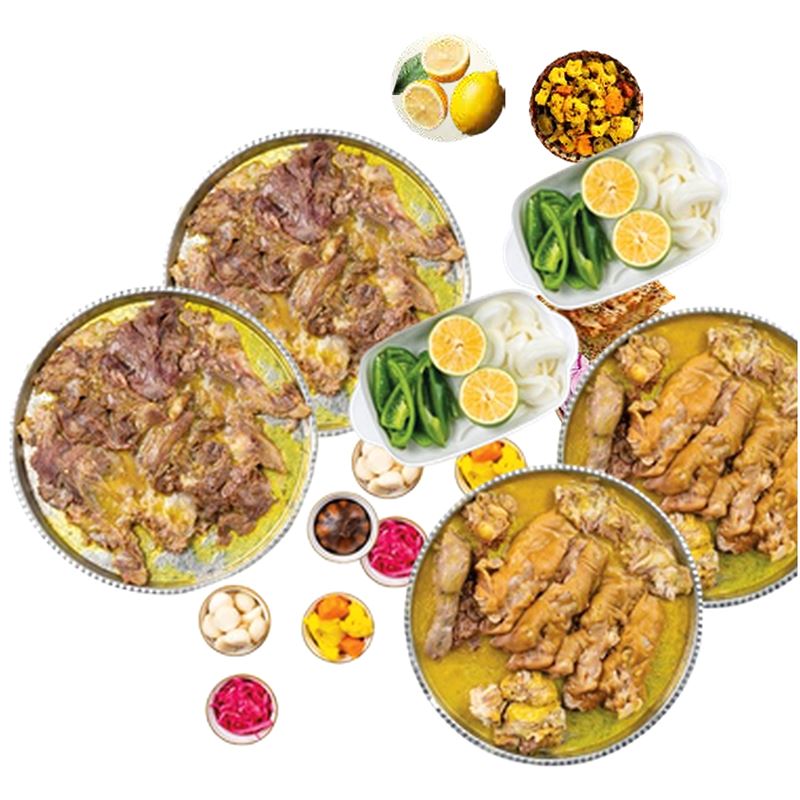
Kalle pache is a traditional Persian soup made by slowly simmering a lamb's head and trotters (feet) for many hours until the meat falls from the bone and the broth turns the deep colour of strong tea. The name joins two Persian words: kalle (head) and pache (trotters). It is one of the oldest and most beloved comfort foods of Iran, eaten warm at dawn, and it remains a treasured ritual for families across Tehran and the wider Persian and Gulf world.
What exactly is in kalle pache?
A full bowl of kalle pache is built from the tender, gelatin-rich cuts of the lamb's head and feet. At Shaun the Sheep, our Tehran-style menu lets you choose exactly what you love, whether you want the whole experience or a single favourite cut:
- Brain (magz) — soft, creamy and mild.
- Tongue (zaban) — smooth and lean, a fan favourite.
- Trotters (pache) — the source of the rich, silky gelatin.
- Lamb cheek — meltingly tender slow-cooked meat.
- Eye (cheshm) — a delicacy for the adventurous.
- Tripe (sirabi) and brain soup or a plain broth for lighter appetites.
Every bowl arrives with warm sangak bread, our garlic torshi (pickles aged seven years), and a glass of cold doogh (salted yogurt drink). You can build your own or order a Special Mix platter for one, two, three, or six people. Ready to taste it? You can order kalle pache online any time of day.
How is kalle pache traditionally eaten?
Kalle pache is a dawn and breakfast dish. In Iran, dedicated shops open before sunrise, and diners arrive early to warm themselves with a bowl before the day begins. The ritual is simple and social: tear off pieces of sangak, dip them in the tea-coloured broth, add a bite of sharp garlic pickle to cut the richness, and sip cold doogh alongside. A squeeze of lemon and a pinch of cinnamon are common finishing touches.
Where does kalle pache come from?
Kalle pache belongs to a long tradition, shared across the Persian world, Iraq and the Gulf, of wasting no part of the animal and turning humble cuts into something nourishing and celebratory. The dish carries different names depending on where you are, which often confuses first-time diners.
| Name | Region | What it means |
|---|---|---|
| Kalle pache | Iran | Head and trotters together |
| Baja (الباجة) | Gulf & Iraq | The same slow-cooked head-and-feet dish |
| Paye | Iran | Trotters (feet) served on their own |
How is authentic kalle pache prepared?
Real kalle pache cannot be rushed. At Shaun the Sheep, the heads and trotters are cleaned by hand before dawn, then simmered for around 14 hours in a copper pot with onion, turmeric and garlic. The pot is skimmed every hour so the broth stays clear, and by morning it has deepened to the colour of strong tea. This slow method is what draws out the collagen and gives the soup its signature silky body.
Why do people love kalle pache?
Beyond the flavour, kalle pache is treasured as a restorative broth. Because it is made from bones and trotters, it is traditionally rich in collagen and gelatin, along with protein and minerals. Many people find a warm bowl deeply comforting, especially on cold mornings or after a long night, which is why it has been valued for generations as a hearty way to start the day. (This is traditional food knowledge, not medical advice.)
Where can I try real kalle pache in Dubai?
Shaun the Sheep (Kalle Pache) serves traditional Tehran-style kalle pache at 64 Jumeira Street, Jumeirah 1, Dubai. We are open 24 hours, 7 days a week, with delivery across Dubai, pickup, and dine-in, so you can enjoy an authentic dawn breakfast or a late-night bowl whenever the craving strikes. To eat in with friends or family, you can reserve a table, or simply order online and we will bring the copper-pot broth to you.
