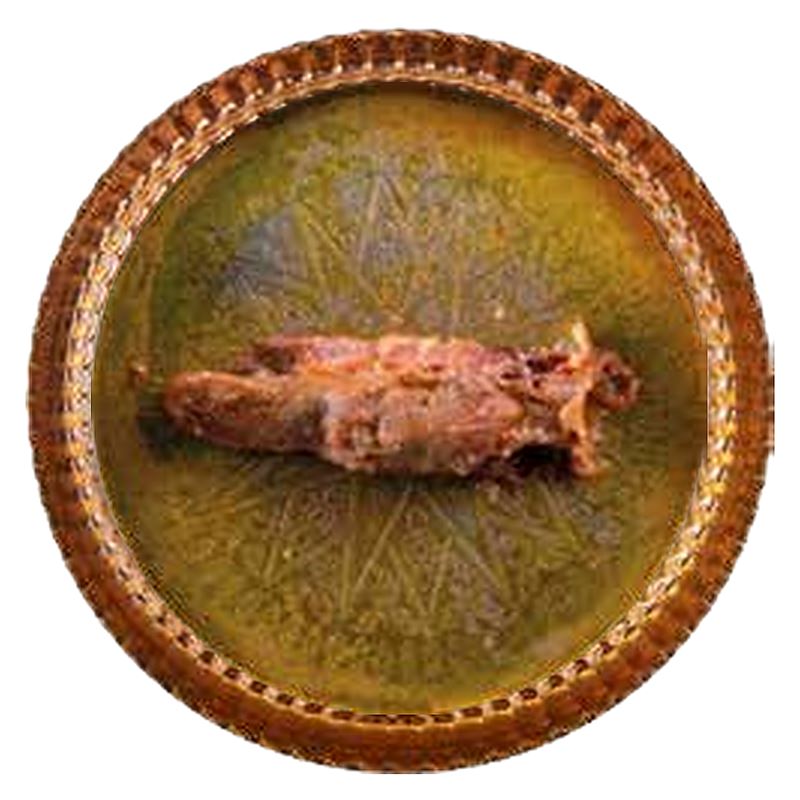
Why Lamb Tongue Is the Cut Newcomers Reach For First
If you have ever hovered over a kalle pache menu — curious but a little unsure — lamb tongue is the cut that quietly wins people over. In Persian it is called zaban, and it is lean, tender and honestly meaty, with none of the surprises that make first-timers nervous. Ask a regular at Shaun the Sheep in Jumeirah what a beginner should order, and the answer comes back again and again: start with the lamb tongue.
Kalle pache is the great Tehran-style dish of slow-simmered lamb head and trotters, known in the Gulf and Iraq as baja. It arrives at the table as a spread of different cuts, and while some of them are bold, zaban is the gentle doorway. It is the cut that lets you say yes.
What Does Lamb Tongue (Zaban) Taste Like?
Here is the honest answer newcomers want: it tastes like a fine, slow-cooked roast. The long simmer turns the muscle silky and tender, and the flavour is mild and savoury — turmeric, garlic and sweet onion, the same aromatics that perfume the whole pot. There is no strong gaminess and, importantly, no chili heat. Kalle pache is a comfort dish, not a spicy one.
If you have enjoyed a well-braised beef cheek or a tender pot roast, zaban will feel familiar rather than strange. The texture is firm but yielding, closer to a good cut of meat than to anything you might expect from the word offal. For a fuller tour of the cuts, our Persian offal guide walks through each one.
Why Lamb Tongue Is a Great Starting Cut
| What newcomers wonder | Why zaban puts you at ease |
|---|---|
| Will the texture be strange? | Firm, tender and sliceable — like a good roast, not soft or spongy. |
| Will it taste too strong? | Mild and savoury, gently perfumed with turmeric, garlic and onion. |
| Is it very fatty? | One of the leanest cuts, with just a little richness for flavour. |
| Are there bones to navigate? | Peeled and boneless, so it is simple to eat with bread. |
| Is it a big commitment? | Easy to share on a mixed platter, so you can taste a little. |
How Is Zaban Served in Kalle Pache?
Everything begins with time. The lamb simmers for about 14 hours in a copper pot with onion, turmeric and garlic, skimmed every hour until the broth is the deep colour of strong tea. The tongue is cooked until it slips out of its skin, then peeled and sliced into tender rounds.
At the table it may come in its own bowl, resting in that golden broth, or as part of the Special Mix sampler platter alongside meat, cheek and trotters. You finish the bowl the traditional way: a squeeze of lime, a little crushed garlic, a pinch of cinnamon and salt to taste. Torn pieces of warm sangak bread do the rest, soaking up the broth so nothing is wasted.
How Should a First-Timer Eat It?
Keep it simple. Order a plate of zaban, or a small mixed platter so you can compare cuts. Tear the sangak, spoon a little broth over a slice, and add lime and garlic gradually — taste as you go. A glass of cool, salted doogh and a pot of black tea round out the meal beautifully. If you are still building your confidence with the dish, you are in very good company; this is exactly how most regulars began.
Is Lamb Tongue Halal and Good for You?
The lamb we serve is halal, in keeping with UAE law and standard practice, and there is no pork anywhere on the menu. In Persian tradition, kalle pache is prized as a nourishing, restorative meal, and cuts like tongue are naturally a source of protein, collagen and minerals. Exact amounts depend on the cut and portion, so we never quote numbers, and this is culinary tradition rather than medical advice. What we can promise is a warm, satisfying bowl.
Ready to try the cut that turns the curious into regulars? Browse our menu and order page for dine-in, pickup or Dubai-wide delivery, or reserve a table and let us walk you through your first taste of zaban. We are at 64 Jumeira Street, Jumeirah 1, open 24 hours a day, seven days a week.
