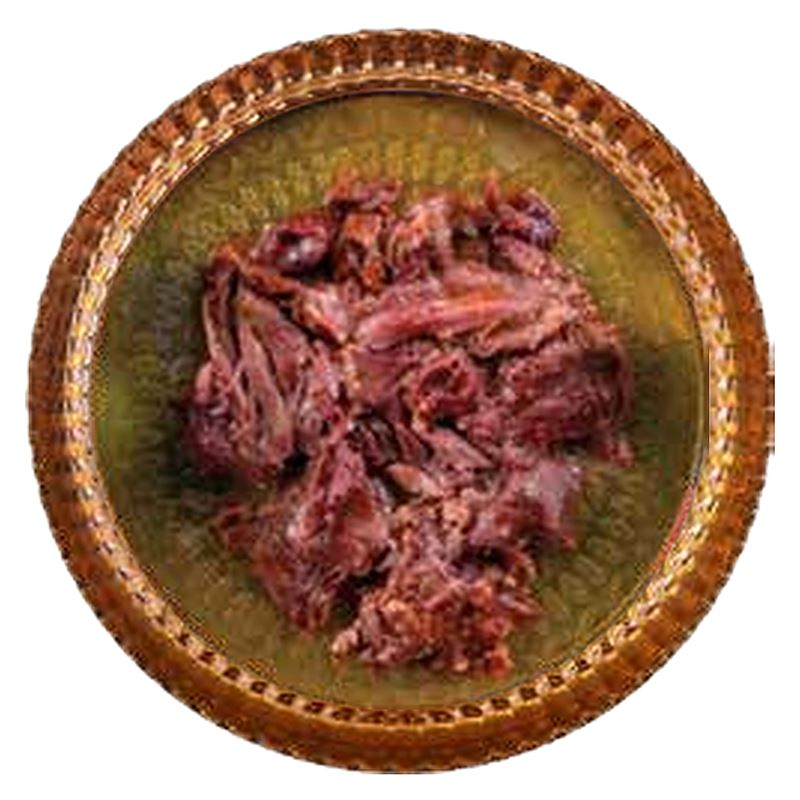
What is lamb cheek (bonagoosh) in kalle pache?
Lamb cheek, known in Persian as bonagoosh (بناگوش), is the small, hard-working cheek muscle on the side of the lamb's head, near the jaw. Because a sheep spends its whole life chewing, this muscle is dense and full of connective tissue, and that means two things: it carries an enormous amount of flavour, and it needs long, slow cooking to become tender. When it is simmered for hours, the collagen melts, the fibres relax, and what was once a tough cut turns silky and spoon-soft. In a bowl of Tehran-style kalle pache, the cheek is the piece that tastes least like offal and most like a beautifully braised piece of lamb.
If you have ever enjoyed a slow-braised lamb shank or a rich meat stew cooked on the bone, you already know the pleasure of cheek meat. It sits in the same family: deeply savoury, tender to the point of falling apart, with a gentle sweetness that only comes from long cooking. You can find it on the menu and order page, either on its own or as part of a mixed platter.
Why is lamb cheek the perfect gateway part?
Kalle pache can feel intimidating if you have never tried it. The word conjures images of brain, tongue and trotters, and for a nervous first-timer that is a lot to take in at once. Lamb cheek is the gentle way in. It looks like meat, it eats like meat, and it has none of the unfamiliar textures that some people worry about. There is no softness that surprises you and no membrane to negotiate — just tender, pull-apart lamb sitting in a rich broth. Regulars often tell newcomers to start here, get comfortable, and explore the other parts later.
What does lamb cheek taste and feel like?
The texture is the first thing people notice. Properly cooked cheek is fork-tender and pulls apart into soft strands, with little gelatinous edges where the connective tissue has melted into the meat. It is not chewy and it is not mushy; it holds together just enough to feel substantial, then gives way completely on the tongue. The flavour is deep and roasted, sweeter and more concentrated than an ordinary cut of lamb, because all that slow simmering draws marrow and collagen into every fibre. Sitting in the warm, tea-coloured broth, it soaks up onion, turmeric and garlic and becomes greater than the sum of its parts.
How does lamb cheek compare to other kalle pache parts?
Every part of kalle pache has its own character. This quick comparison shows where the cheek sits, and why it is such an easy place to begin.
| Part | Texture | How it eats | Best for |
|---|---|---|---|
| Cheek (bonagoosh) | Fork-tender, pulls apart | Like braised lamb | First-timers and meat lovers |
| Tongue (zaban) | Firm yet tender, sliced | Mild and meaty | Cautious newcomers |
| Trotter broth (pacheh) | Silky, gelatinous liquid | Light and warming | Sipping and dipping bread |
| Brain (maghz) | Soft, custard-like | Rich and buttery | Adventurous, indulgent eaters |
How is lamb cheek eaten within kalle pache?
The ritual is simple and very satisfying. Tear a piece of warm sangak bread, use it to lift a strand of cheek and a little broth, and eat the two together so the bread soaks up the liquor. Many people add a dab of seven-year garlic pickle or a forkful of mixed torshi to cut through the richness, then chase it with cold doogh. The cheek does not need a knife; it is meant to be pulled apart with bread or a spoon. If you want the broth to shine, ask for a little extra to ladle over the meat and bread as you go.
Who loves lamb cheek, and who might find it challenging?
Lamb cheek has the widest appeal of any part on the menu. Meat lovers adore it because it is essentially the tenderest, most flavourful braise you can imagine. Children usually take to it happily because it tastes familiar. And people who feel cautious about kalle pache almost always find that the cheek puts them at ease. The only diners who might hesitate are those who prefer very lean, dry meat, because cheek is by nature rich and a little gelatinous — that silkiness is exactly what fans love, but it is worth knowing if you like your lamb plain and lean. Even then, pairing it with sharp torshi and bread balances the richness beautifully.
How do I order lamb cheek at Shaun the Sheep?
You have a few options. You can order the cheek on its own if you want to focus on one part, or choose the Special Mix, which brings cheek together with tongue and other cuts on one platter so you can taste the range. Communal platters serve one, two, three or six people, which makes the cheek an easy centrepiece for a shared table. Round it out with special sangak, mixed torshi, seven-year garlic pickle, and doogh, lemonade or tea, and add an abgoosht (dizi) if you want a second dish alongside. If you would rather sit down with the whole spread in front of you, you can reserve a table.
We are one kitchen at 64 Jumeira Street, Jumeirah 1, open 24 hours a day, seven days a week, and we deliver to every area in Dubai, with the fee shown by area at checkout and delivery free on orders over AED 300. Pickup and dine-in are always available, and you can schedule an order ahead for a time that suits you. Payment is by secure card online.
Is the lamb cheek halal, and how is it cooked?
Yes. The lamb we serve is halal, in line with UAE law and standards. The cheek is prepared the traditional Tehran way: the heads are hand-cleaned before dawn, then everything simmers gently for around fourteen hours in a copper pot with onion, turmeric and garlic, skimmed through the night until the broth turns the colour of strong tea. That unhurried method is exactly what makes the cheek so tender — there are no shortcuts, just time and low heat. Browse the full selection on the menu and order page whenever you are ready to try it.
