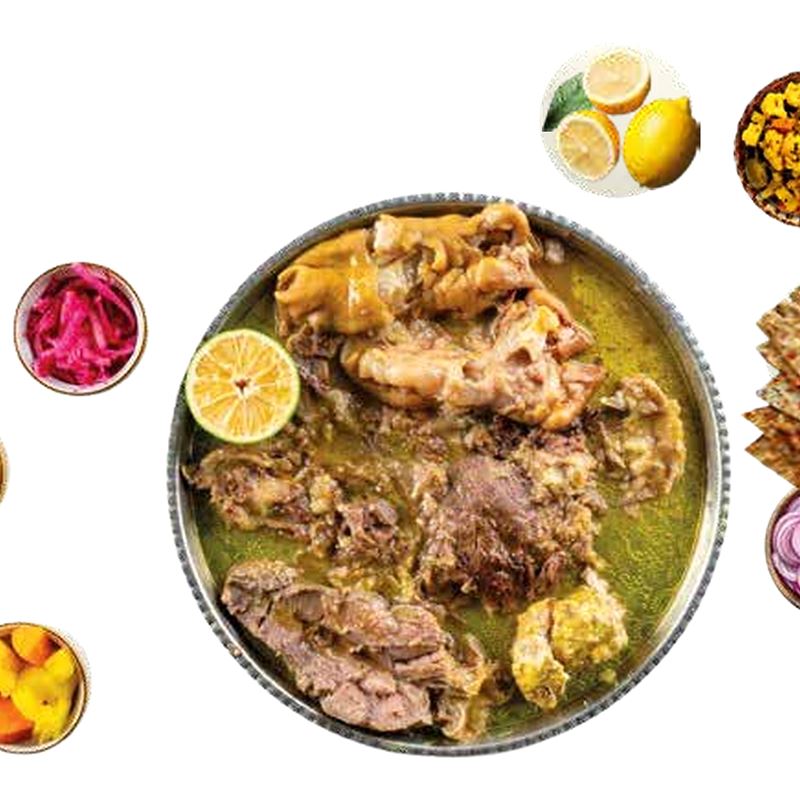
What is kalle pache, and why is it considered so extraordinary?
Kalle pache is a traditional Tehran-style Persian dish of lamb head and trotters, slow-simmered for around fourteen hours into a deeply savoury broth — and it is one of the world's most extraordinary foods, a true nose-to-tail delicacy eaten for centuries across Iran, the Gulf and Iraq. The name comes from Persian: kalle (head) and pache (trotters). In the Gulf and Iraq the same dish is called baja (الباجة); in Iran it is kalle pache (کلهپاچه); the trotters served alone are paye (پاچه). For adventurous eaters and serious food lovers, tasting it is a genuine bucket-list moment — and it is now made authentically in Jumeirah, Dubai. You can order it here.
Why do food lovers call it a bucket-list experience?
Great food travel is about the dishes that could only ever have come from one place and one tradition. Kalle pache is exactly that: patient, honest, unforgettable cooking that respects the whole animal. Nothing is wasted, and every part offers a different texture — the silk of slow-cooked cheek, the richness of tongue, the gelatinous give of trotter. It rewards curiosity. Once you understand it, an ordinary breakfast never feels quite the same again.
How is authentic kalle pache actually made?
The magic is time. At Shaun the Sheep the pieces are hand-cleaned before dawn, then simmered for roughly fourteen hours in a copper pot with onion, turmeric and garlic. The broth is skimmed by hand every hour, slowly reducing until it turns the colour of strong tea — clear, golden-brown and intensely aromatic. There are no shortcuts and no powders; this is exactly how it has been cooked in Tehran for generations. That long, gentle simmer is also what draws collagen and gelatin from the bones and trotters, giving the broth its signature body.
What does the menu include?
The table is built for sharing. Beyond the classic broth you'll find brain, tongue, trotters, tripe, eye, lamb cheek, brain soup and the house Special Mix, alongside fresh sangak bread, seven-year garlic pickles and cooling salted doogh (yogurt drink). Communal platters are portioned for one, two, three or six people, so a curious solo diner and a full table of friends are equally at home.
Where does kalle pache sit among Dubai's must-try foods?
| What you want | Why kalle pache delivers |
|---|---|
| The most unique food in Dubai | An ancient nose-to-tail tradition rarely cooked authentically anywhere |
| A real cultural experience | Centuries of Persian and Gulf breakfast heritage in one bowl |
| Something restorative | Collagen-, protein- and mineral-rich broth, traditionally valued as a pick-me-up |
| Available any time | Served 24 hours, 7 days — including the classic dawn ritual |
Is kalle pache good for you?
Kalle pache is traditionally valued as a restorative, warming meal. Because it is simmered from bones and trotters, the broth is naturally rich in collagen and gelatin, along with protein and minerals, and many people find it wonderfully sustaining — which is why it has long been a favourite dawn and cold-weather food. We share this as culinary tradition, not medical advice.
Is the kalle pache at Shaun the Sheep halal?
Yes. In the UAE all meat sold is halal by law and standard, and the lamb we use is halal. You can enjoy every part of the platter with complete peace of mind.
How can I try kalle pache in Dubai?
Shaun the Sheep (Kalle Pache) is at 64 Jumeira Street, Jumeirah 1, Dubai, open 24 hours, 7 days a week. You can dine in, pick up, or get delivery across Dubai (a fee applies per area). To taste one of the world's most extraordinary foods, place your order here or reserve a table. Prefer to call? Reach us on 04 321 8882 — whether it's a dawn tradition or a midnight craving, the pot is always on.
