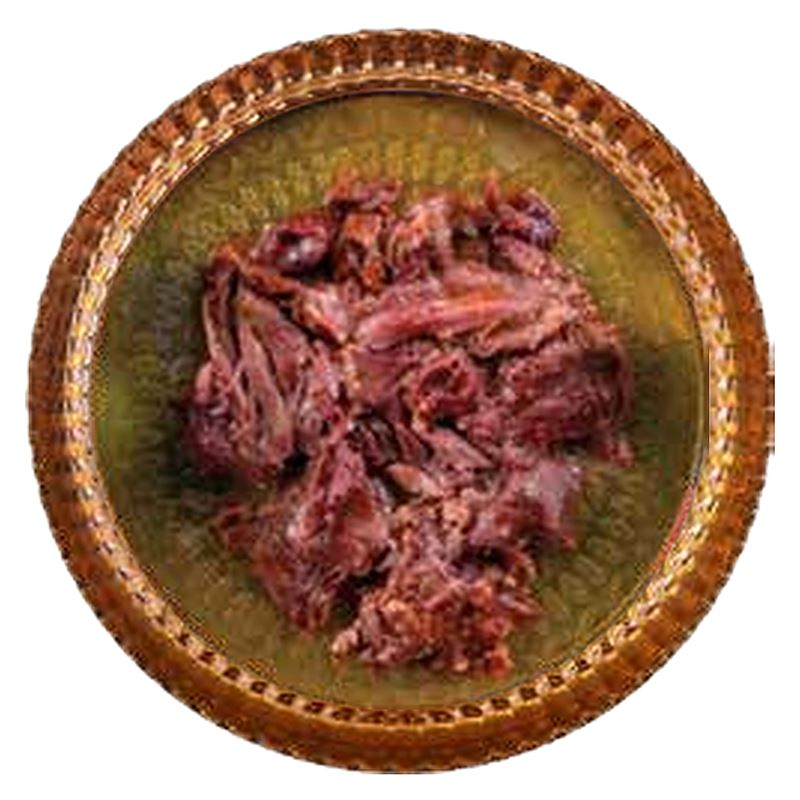
Harees and kalle pache are both slow-cooked, but they sit at opposite ends of texture. Harees is wheat and meat cooked for hours and then beaten until nothing is separate any more — one smooth, pale porridge; kalle pache is lamb head and trotters simmered until the broth runs deep and every part turns tender, served as broth plus distinct pieces you eat one at a time.
Live in Dubai long enough and you will meet both. Harees turns up in Ramadan, at Eid, at weddings and in the majlis, cooked by families who have made it the same way for generations. Kalle pache turns up before dawn, on mornings cold enough to make you want broth. This is a know-your-city's-food piece, not a contest. We cook kalle pache at Shaun the Sheep and we do not serve harees — so read the harees half of this article as respect, not as a menu.
What exactly is harees?
Harees is wheat, meat, salt and water, plus a great deal of time. The wheat is soaked, then cooked very slowly with meat — chicken and lamb are both common — until the grains swell, soften and finally give way. Then comes the step that defines the dish: the pot is beaten, traditionally with a heavy wooden paddle, until the meat fibres vanish into the wheat and everything arrives at a single texture.
What you get is thick, pale and almost creamy — closer to a savoury porridge than to a stew. The seasoning is deliberately quiet: a spoonful of ghee melted over the surface before serving, and in some households a pinch of cinnamon or a little sugar. Harees is food for a room full of people, for the end of a fasting day, for a table where nobody wants anything loud.
What exactly is kalle pache?
Kalle pache is named after its two halves: kalle, the head, and pache, the trotters. Lamb heads and trotters are cleaned with care, then simmered for many hours — traditionally overnight — with onion and gentle aromatics, until the broth carries body and every part has softened in its own way. If the whole idea is new to you, start here.
Nothing is beaten and nothing is blended, and that single fact is the difference. The brain stays silky. The tongue stays firm enough to slice. Lamb cheek is dense and meaty. The trotters turn gelatinous. And the broth — the abgoosht-style soup — is a dish in its own right, ordered by the bowl. On our menu each of these is a single you can order on its own: Soup, Brain Soup, Brain, Tongue, Trotters, Lamb Cheek, Eye, Meat, Tripe, and the Special Mix for a little of everything.
How do the two compare, side by side?
| Harees | Kalle pache | |
|---|---|---|
| Main ingredients | Wheat and meat, salt, water | Lamb head and trotters — brain, tongue, cheek, eye, meat, tripe — and their broth |
| Texture | Smooth, thick, uniform; nothing distinguishable | Brothy, with separate pieces, each a different texture |
| Defining step | Beaten until it becomes one thing | Simmered for hours; every part kept whole |
| Traditional occasion | Ramadan, Eid, weddings, gatherings | Dawn and early morning, especially in the cold |
| How it is eaten | With a spoon, from a shared dish, ghee on top | With bread, building each bite; broth spooned or sipped |
| Usually alongside | Part of a wider spread of dishes | Sangak bread, torshi, doogh or tea |
| At our kitchen | Not served — this is a guide, not an offer | The whole menu, 24 hours a day |
Read the table sideways and they stop looking like rivals. They answer different questions: harees feeds a whole room gently; kalle pache wakes a body at five in the morning.
Why does the texture difference matter so much?
Because texture decides how you eat. Harees is a spoon dish: one consistency all the way down, and the pleasure is in how evenly it comforts. Nothing to pick around, nothing to choose between.
Kalle pache is a bread dish, and it asks you to make decisions. You tear a piece of sangak, decide what is going on it, add a little broth, maybe a slice of pickled chili, and eat. The next bite is a different composition entirely. First-timers from a harees background sometimes expect the pieces to share one texture; they do not, and that variety is the point.
When is each one traditionally eaten?
Harees is Ramadan food above all — the dish that appears at iftar tables across the Gulf, then again at Eid, at weddings and at big family occasions where one wide pot has to serve everyone. Its timing is the calendar's timing, not the clock's.
Kalle pache lives at the other end of the day. In Iran the kalle pache houses open in the small hours and are busiest before sunrise; it is eaten early, often before work, and most enthusiastically when the morning is cold. Dubai's climate removes half that logic but none of the habit. Our kitchen is open 24 hours, every day, which is what makes that hour genuinely available here — and you can place a scheduled order for a future time, up to about two days ahead.
How is each one served and shared?
Harees is served the way food for many people is served: one wide dish in the middle, ghee glossing the surface, spoons all around. Nobody is handed a portion; everybody reaches.
Kalle pache is shared by count instead. Our platters are sized in dishes: the Single Dish for one, the Double Dish for two, The Full Dish for three, and The Khan's Platter for six — four lamb cheeks, eight trotters, two brains, three tongues, four eyes and five breads. For a table of six, the Khan's Platter guide walks through it properly.
Around the dish go Sangak Bread or Special Sangak, then Mixed Torshi or Garlic Torshi to cut the richness, then Doogh, fresh Lemonade or Tea. A Kettle of Tea is dine-in only and cannot be delivered. Extras are their own separately-orderable row that you tick alongside your dish — Capsicum, Onion, Fresh Chili, Pickled Green Chili and extra Sangak — so they never arrive automatically. There is an Omelette on the menu too.
If harees is the one you know, where should you start?
Start where the textures are most familiar. A bowl of Soup with Meat or Lamb Cheek, plus sangak, is recognisably the same family of cooking: rich, savoury, forgiving. Brain and Tongue are better as a second visit, once the broth has convinced you. The Special Mix is the full tour.
If you are still unsure, our guide to choosing a single goes part by part — or phone 04 321 8882 and ask. A minute on the phone beats guessing.
How do you order kalle pache in Dubai?
From the website, and that is the whole system. There is no account, no sign-up, no password and no app — you give a name and a phone number. Delivery also needs your Dubai area from the list and a pin on the map, and delivery is free over AED 300. Pickup needs neither the area nor the pin, and you can also dine in with a table reserved. Payment is a secure online card payment at checkout, prepaid, and it is the only method we take.
Once you have paid, the kitchen confirms your order and sets an estimated time. The order gets its own page you can follow, and the rider phones you on arrival. If the kitchen cannot fulfil an order, it is refunded automatically to the card that paid, with the reason shown on that order page. The site is trilingual — English, Arabic and Farsi, with a switcher — so the menu, checkout and order page read in the language you pick, dish names included, and that choice is remembered on your device. To change anything about an order, phone 04 321 8882 and speak to the kitchen.
What should you ask before you order?
If you have an allergy, or you want to know how hot the fresh chili really is, phone 04 321 8882 and ask before you order. We would rather answer honestly than promise what a working kitchen cannot guarantee about cross-contact. Nothing here is medical advice — if you have a health condition or a dietary restriction, ask your doctor.
Two dishes, two clocks, two ideas of comfort. Knowing both is part of eating well in this city.
