What is nazri, and why do Iranians cook food to give away?
Nazri (نذری) is votive food — a meal cooked not to be sold but to be given freely to others. It begins with a nazr, a quiet vow a family makes in a moment of hope or worry: if a loved one recovers, if a journey ends safely, if a long-held wish is granted, they promise to cook and to feed people. When the day of thanks comes, the kitchen fills with steam and the food goes out to neighbours, the needy and passing strangers alike, with no bill and no line drawn between guest and host. What is given is never the leftovers; it is the best pot the house can make, carried with an intention (niyyat) of gratitude. In this tradition, feeding others is itself the prayer.
How is a giant pot of broth cooked for a whole neighbourhood?
Nazri is rarely a small affair. Families and mosques bring out an enormous cauldron — in Persian a deeg — set over a low fire before first light, and the cooking becomes the work of many hands. Onions are peeled by the sackful, bones and meat are lowered in, and volunteers take turns leaning into a long wooden paddle, because no one person can stir a pot that size for hours on end. A great vat of broth is, in a way, the perfect nazri: a little meat and a heap of bones, simmered slowly, will stretch to fill hundreds of bowls. The patience it demands — skimming, waiting, tending the flame through the dark — is part of the offering. By the time the sun is up, a line has formed with pots and jugs, and the broth is ladled out until the last bowl is full.
Which occasions call for nazri, from vows to the mourning months?
Nazri appears whenever gratitude or remembrance needs to be shared rather than kept. The most widely known is during the mourning months, when communities cook on a vast scale in memory of the events of Ashura, and whole streets fill with the smell of stew and broth handed to anyone who passes. But the tradition is far broader than any single season:
| Occasion | What it expresses | Often shared |
|---|---|---|
| A vow fulfilled | Thanks for a wish granted or a worry lifted | Broth, aash, sweet saffron rice |
| Mourning months (Muharram & Safar) | Remembrance and solidarity | Great pots of stew, soup and tea |
| A safe return or recovery | Relief and gratitude | Halva, warm bread, broth |
| Everyday hospitality | An open door and a shared table | Whatever the house is cooking that day |
In every case the rule is the same: the food is free, and the door is open to everyone.
What does kalle pache have to do with the spirit of nazri?
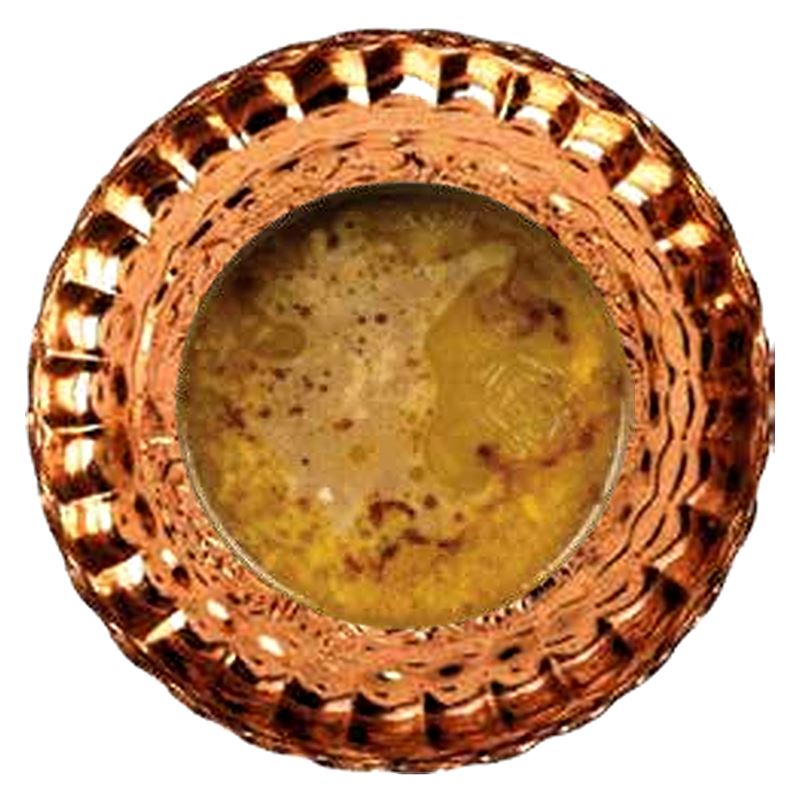
Kalle pache carries the same instinct in its bones. It is a dish of thrift and respect — the head and trotters of the lamb honoured so that nothing is wasted, humble cuts turned by long cooking into something rich enough to feed a whole table. Like nazri, it is a food of the pre-dawn hours and the big pot. At Shaun the Sheep the lamb is hand-cleaned before dawn and simmered for around fourteen hours in a copper pot with onion, turmeric and garlic, skimmed hour by hour until the broth is the colour of strong tea. We should be honest: a bowl bought in a restaurant is not a religious offering, and we would never pretend otherwise. But the table manners are the same — broth made slowly, meant to be shared, generous by nature.
How does that generosity live on at a shared table today?
You can feel the echo every time a family gathers around a communal platter. Ours are built for sharing — sized for one, two, three or six — so a couple, a small family or a full table can reach into the same spread of brain, tongue, trotters and cheek, tearing warm sangak and passing the torshi and doogh along. No one eats alone, and a generous order is meant to overflow a little; the leftovers travel home the way a nazri bowl is carried to a neighbour. Order enough to feed everyone and delivery is free on orders over AED 300 — a small nudge, in its own way, toward the fuller pot. Browse the menu and order page to build a spread for your own people.
How can I share a pot of broth with my own people in Dubai?
Shaun the Sheep sits at 64 Jumeira Street in Jumeirah 1, open 24 hours a day, seven days a week — close to Jumeirah, Al Wasl, City Walk, Downtown, DIFC, Business Bay, La Mer and Jumeirah Bay, and delivering across all of Dubai. Come in for the full ceremony at dawn or midnight, collect on your way home, or have a platter sent to your door; the lamb is halal, as all meat sold in the UAE is by law. For a family gathering, reserve a table so your spread is waiting when you arrive. However you gather, the idea that nazri has carried for centuries still holds: the best food is the food you share.
