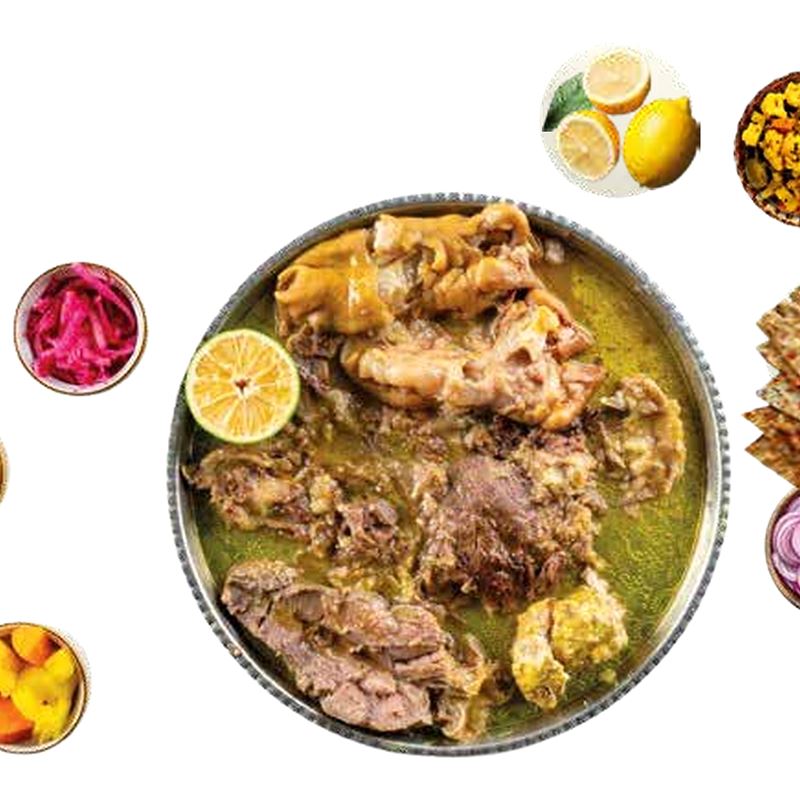
The hard part of a group kalle pache order in Dubai is the coordination, not the food. The short answer: one person collects everyone's picks in a single message, that same person places the whole thing as one order and pays with one secure online card payment at checkout, and the group sorts out the shares between themselves afterwards. Agree who is paying before the basket is built, not after it is full.
Add an agreed arrival time and one address with an accurate map pin, and a nine-person order becomes as simple as a solo one. Here is the sequence, with a table matching group size to order shape.
Why do group orders usually fall apart?
Rarely because of the menu. They fall apart because three people reply "anything", two reply an hour late, and the address turns out to be where the group usually meets rather than the flat everyone is in tonight. Kalle pache adds one more variable most food does not: the gap between the boldest eater in the room and the most cautious one is wide. Someone who grew up on it wants brain, tongue and eye; a first-timer wants broth, meat and warm bread. Both can leave happy from the same order, but only if you plan for both from the start.
How do you collect everyone's picks without a forty-message thread?
Send one message with a shortlist and a deadline. Open the menu first and paste the real names into the chat: people choose far faster from a list than from an open question.
By the bowl there is Soup (the abgoosht broth), Trotters, Meat, Lamb Cheek, Tongue, Brain, Brain Soup, Eye, Tripe, and the Special Mix, which is a little of everything. Ask each person for one line: their single, plus one add-on from capsicum, onion, fresh chili, pickled green chili or extra sangak. Then set a cut-off time and say plainly that silence means you will order for them: nobody has ever been offended by a bowl of broth and warm bread.
Collect drinks in the same message so you are not chasing twice. Doogh, fresh lemonade, black tea and water all travel well. A kettle of tea does not: that one is dine-in only, so a group set on a shared kettle is planning a table, not a delivery.
Platters or a pile of singles: which shape should the order take?
Platters are built for sharing and cut the decision-making dramatically; singles are precise. For most groups the right answer is a platter as the spine of the order, with singles patching the gaps at either end.
The Khan's Platter is the clearest example of that logic. It feeds six and lands as four lamb cheeks, eight trotters, two brains, three tongues, four eyes and five breads: one decision instead of six. If two of your six are cautious, keep the platter and add a Soup and a Meat beside it, and nobody has to negotiate over the brain. The Khan's Platter guide has the full breakdown.
Smaller groups have simpler answers: the Double Dish for two, The Full Dish for three, the Single Dish for one.
| Group size | Order shape that works | Who-pays tip |
|---|---|---|
| 2 | Double Dish, sangak, one torshi, two drinks | Whoever holds the phone pays; the other covers the next round. |
| 3 | The Full Dish, plus one single for the biggest appetite | One payer, two transfers, same evening. |
| 4-5 | The Full Dish, two singles, extra sangak, mixed torshi | Agree an equal per-head share and ignore the small differences. |
| 6 | The Khan's Platter, extra torshi, drinks | Split evenly: it arrives as one shared plate. |
| 7-10 (office or shared flat) | The Khan's Platter plus singles for the rest, and plenty of sangak | Collect before you check out. Money moves faster while the food is still coming. |
How do you keep bold and cautious eaters happy in one order?
Split the order into two tiers, out loud, so nobody feels ambushed at the table. The gentle tier is Soup, Meat, Lamb Cheek and Tongue: broth-led, familiar textures, nothing that needs a running commentary. The full-experience tier is Brain, Brain Soup, Eye, Trotters and Tripe, with the Special Mix for whoever wants a bit of all of it. Someone unsure will still try a spoonful of brain folded into bread with garlic torshi beside it, so the tiers are a starting point, not a wall.
Then over-order bread and pickles. Sangak is what makes a shared table work: everyone tears, dips and passes. Take both mixed torshi and garlic torshi so there is a sharp bite at every seat. The guide to choosing a single is the fastest way to brief a first-timer, and the full menu guide covers the sides.
What time should it arrive, and can you lock that in?
The kitchen is open 24 hours, every day, so a group order at 3am is as ordinary as one at 9am. The harder problem is agreeing on a time, not finding one.
Use the scheduled order option: at checkout you can pick a future time, up to about two days ahead. A dawn breakfast after a long night out can be booked the evening before, and an office order for 8:30am can be placed the previous afternoon, while everyone is still in the same room to be asked.
After payment the kitchen confirms the order and sets an estimated time, and you can follow its progress on the site. The rider calls on arrival, so put down the number of whoever will actually go to the door.
One address, one map pin: the step groups get wrong
Delivery needs two things from you: your Dubai area chosen from the list, and a pin dropped on the map. Both are required, and a rider carrying six hot bowls at 4am cannot work with "the building on the corner". Put the pin on the entrance where you will actually meet the rider, not in the middle of the neighbourhood.
One order goes to one address. If half the group is in Marina and half is in Deira, that is two orders, two pins and two payments, a decision worth making at the start of the thread. Delivery is free on orders over AED 300, so the size of a group order works in your favour.
Who pays, and how does the group settle up?
The website takes one secure online card payment at checkout. That is the only method, and the order is paid before the kitchen starts cooking, which is why nothing has to be handled at the door. Sharing the cost afterwards is a conversation between friends, so give it two minutes of planning:
- Name the payer first. Before you ask for a single pick, say who is paying. It stops the awkward pause at the end.
- Screenshot the basket before you pay. One image in the group chat is a better record than anyone's memory two days later.
- Settle the same day. Shares sent while the bowls are still on the table always arrive. Shares chased on Wednesday often do not.
- Rotate instead of calculating. Groups who eat together often can simply take turns paying.
What if the group would rather eat at the kitchen?
Then several problems disappear at once. It is one kitchen in Jumeirah 1 with no branches, so there is no "which one" to argue about. You can reserve a table, everyone orders exactly what they want when they sit down, and the kettle of tea that cannot be delivered finally makes it onto the table. Pickup is the third option; the delivery, pickup and dine-in comparison lays out the trade-offs.
The organiser's ten-minute checklist
- Decide the payer and the arrival time first.
- Paste the list of singles into one message with a reply deadline.
- Pick the platter that covers the middle of the group; add singles for the edges.
- Over-order sangak, take both torshis, and remember the kettle of tea is dine-in only.
- One Dubai area, one accurate map pin, one phone that will be answered.
- Schedule the time, pay once, share the screenshot, settle that evening.
That is the whole job. Get the picks in, pay once, and the rest is just bread being torn. When your list is ready, start the order.
