What is torshi, and why does it always sit next to kalle pache?
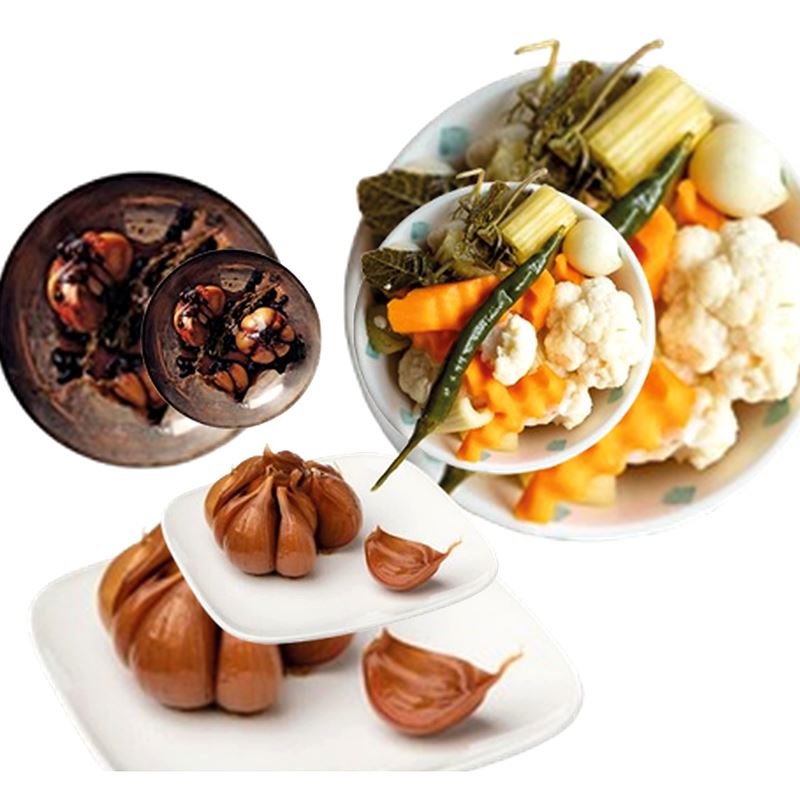
Torshi (Persian ترشی, from the word for "sour") is the family of Iranian pickles preserved in vinegar and salt. The most beloved is torshi makhloot — a finely chopped mix of cauliflower, carrot, celery, garlic, chilli and a heap of fresh herbs, drowned in vinegar and left for weeks to mature. On a Tehran-style kalle pache table it is never optional. A spoonful of sharp, herby pickle is exactly what stops a bowl of rich, fatty broth from becoming too much. If you would rather not wait weeks, we serve mixed torshi and a seven-year garlic pickle as sides you can add on our menu and order page — but the homemade version is genuinely worth making.
Why does torshi cut the richness of kalle pache?
Kalle pache is unctuous by design: hours of simmered head and trotters give a broth thick with collagen and fat. Acidity is the natural counterweight. The vinegar in torshi resets your palate between spoonfuls, the raw garlic and chilli lift the flavour, and the herbs add a freshness that a long-cooked broth cannot. It is the same logic as a squeeze of lemon on a heavy dish — only sharper, and Persian.
What do you need to make torshi makhloot at home?
This recipe fills roughly two 1-litre jars. Chop everything small and uniform — torshi is eaten by the teaspoon, not the forkful.
- 1 small cauliflower (about 500 g), broken into tiny florets
- 2 carrots (about 200 g), finely diced
- 3–4 celery stalks (about 200 g), finely chopped
- 150 g green beans, finely chopped
- 1 small aubergine, diced (optional, but very traditional)
- 2 heads of garlic, cloves peeled and left whole or halved
- 4–6 green chillies, finely chopped (adjust to taste)
- A large bunch of mixed fresh herbs — parsley, mint, coriander, dill and tarragon — about 200 g, finely chopped
- 2 tablespoons golpar (ground Persian hogweed), optional but classic
- 1 tablespoon nigella seeds (siah daneh)
- 1 tablespoon coriander seeds, lightly crushed
- 2–3 tablespoons salt
- About 1 litre white or apple-cider vinegar, at least 5% acidity — enough to cover everything
The equipment is simple but non-negotiable in two places: clean glass jars with tight-fitting lids, and a non-reactive bowl of glass or stainless steel — never aluminium, which reacts with vinegar.
How do you make Persian mixed torshi, step by step?
- Wash and dry everything meticulously. Rinse all the vegetables and herbs, then spread them on clean towels and let them air-dry for several hours or overnight. This is the step people rush and regret — any trapped water dilutes the vinegar and invites mould.
- Sterilise the jars. Wash jars and lids in hot soapy water, rinse well, then dry them in a low oven (about 120°C for 15 minutes) or pour in boiling water and empty it. Let them cool before filling.
- Chop small and even. Cut every vegetable to a similar small size so the mix pickles evenly and sits neatly on a spoon.
- Mix with salt and spices. In the non-reactive bowl, combine all the vegetables and herbs with the salt, golpar, nigella and coriander seeds. Toss thoroughly.
- Pack the jars tightly. Press the mixture into the jars, leaving 2–3 cm of headspace at the top.
- Cover completely with vinegar. Pour vinegar over until everything is fully submerged; nothing should poke above the surface. Tap the jar to release trapped air bubbles.
- Seal, wipe and label. Close the lids tightly, wipe the rims clean and write the date on each jar.
- Store cool and dark, then wait. Keep the jars in a cool, dark cupboard. Refrigerate once opened, and always serve with a clean, dry spoon.
How long does torshi need to mature?
At least three to four weeks, and ideally six to eight. Fresh torshi tastes raw and harshly vinegary; time is what softens the vegetables, blends the herbs and spices into the brine, and turns the whole thing mellow and complex. The vinegar and salt are doing the preserving, so patience is not only for flavour — it is the method itself. If the liquid ever drops below the vegetables, top it up with more vinegar to keep everything covered.
What is seven-year garlic pickle, and can I make it?
Seer torshi — aged garlic pickle — is the prize of the Persian pantry, and the seven-year version is legendary. The method is almost absurdly simple: pack whole peeled garlic cloves (or small whole bulbs) into a sterilised jar, cover completely with vinegar, sometimes with a spoon of grape or date syrup, seal it and forget it. Over months and years the cloves darken from cream to amber to a deep chocolate-black, the harshness disappears, and the garlic turns soft, sweet-sour and mellow. Top up the vinegar whenever it dips. What you cannot shortcut is the wait — a true seven-year garlic really does take seven years, which is exactly why a good one is treasured, and why it is the classic partner to a bowl of kalle pache.
How hard is it, honestly?
Torshi makhloot is not difficult — there is no cooking at all. The real work is in the drying and the cleanliness, and the real challenge is patience. Get the vegetables properly dry, keep everything submerged in strong vinegar, use clean jars and a clean spoon, and it keeps for many months. This is home-kitchen tradition rather than certified food science, so if a jar ever smells off, looks fizzy, or grows anything fuzzy, throw it out rather than taste it.
Prefer to skip the weeks of waiting?
Making torshi is a slow pleasure, but a bowl of kalle pache is a right-now craving. You can add our mixed torshi and seven-year garlic pickle straight to your order on the menu and order page, alongside warm sangak and a cold doogh — delivered across Dubai, 24 hours a day, with delivery free over AED 300. If you would rather gather around a table with the pickles already on it, you can also reserve a table at our Jumeirah 1 kitchen.
