What is kateh, and how is it different from chelo?
Kateh is the simplest way to cook Persian rice: everything goes into one pot, the rice absorbs all of its water, and there is no draining. It is the everyday rice of northern Iran — Gilan and Mazandaran — where cooks make it fast and often. Chelo, the more formal restaurant-style rice, is a two-step method: you parboil the rice in plenty of salted water, drain it, then steam it back up so that every grain stands separate and fluffy. Kateh skips the draining entirely. The result is a little softer and more tender, with grains that cling together just slightly, and — if you are patient — a golden crust at the bottom called tahdig. Because it is a one-pot absorption method, kateh is the friendliest Persian rice for a beginner. If you have never made Persian rice before, start here.
Do you need special equipment or skill?
Good news: almost none. You need a heavy nonstick pot with a well-fitting lid — nonstick makes the tahdig release in one piece — and a clean tea towel to wrap the lid, which catches the steam and stops the rice from going soggy. That is it. No rice cooker, no special pan. The one thing that takes a couple of tries is the tahdig: a crisp, even, golden crust needs low heat and patience, not skill. Your first kateh will taste great even if the crust comes out uneven, and by your third you will have it. Be honest with yourself about the timing, too — the rice needs roughly 40 minutes of quiet steaming that you should not rush or peek at.
What ingredients do you need for kateh?
This makes a comfortable pot for three to four people.
- 2 cups (about 400 g) long-grain rice — basmati or Iranian rice
- 3 cups (about 720 ml) water, plus a splash more if you like softer rice
- 1 to 1.5 teaspoons salt
- 3 tablespoons butter, or a neutral oil, or a mix of both
- Optional, for a stronger crust: 2 extra tablespoons oil and 2 tablespoons water for the base
- Optional: a small knob of butter and a pinch of saffron dissolved in a spoon of hot water, to finish
How do you make kateh step by step?
- Rinse the rice in cold water three or four times, swirling gently, until the water runs almost clear. This washes off surface starch so the rice is not gluey and the crust crisps better.
- Put the rinsed rice, the water, the salt and 1 tablespoon of the butter or oil into your nonstick pot and stir once to level it.
- Bring to a boil uncovered over medium-high heat. Let it bubble, without stirring, until the water drops to the level of the rice and small craters or steam holes appear on the surface — about 10 to 15 minutes.
- Melt the remaining butter or oil and drizzle it evenly over the top. For a firmer tahdig, pour the optional oil-and-water mix around the edges now.
- Wrap the lid tightly in a clean tea towel (fold the corners up over the handle so they stay off the heat) and set it firmly on the pot.
- Turn the heat to its lowest setting and steam — this stage is called dam — for 35 to 40 minutes. Do not lift the lid; you are trapping steam to finish the grains and build the crust.
- When the time is up, the rice on top should be fluffy and tender and the kitchen should smell toasty from the crust below.
- To release the tahdig in one piece, sit the hot pot on a wet folded towel or in a shallow tray of cold water for one to two minutes; this loosens the crust. Serve the fluffy rice first, then lift out or invert the golden tahdig — the best part.
How do you get a golden tahdig crust?
Three things make or break tahdig. First, rinse well so the grains are clean and separate. Second, use enough fat at the base — butter, oil, or both — because the crust is essentially rice fried gently in that layer. Third, keep the heat low and steady: high heat burns the middle before the edges colour. If you want an even more reliable crust, lay a single layer of thin flatbread, a few slices of potato, or a spoon or two of yogurt-mixed rice across the oiled base before you add the rest — all classic tahdig tricks. Listen near the end: a faint crackle means the crust is forming. When in doubt, another five minutes on low rarely hurts.
Can you cook kateh in leftover kalle pache broth?
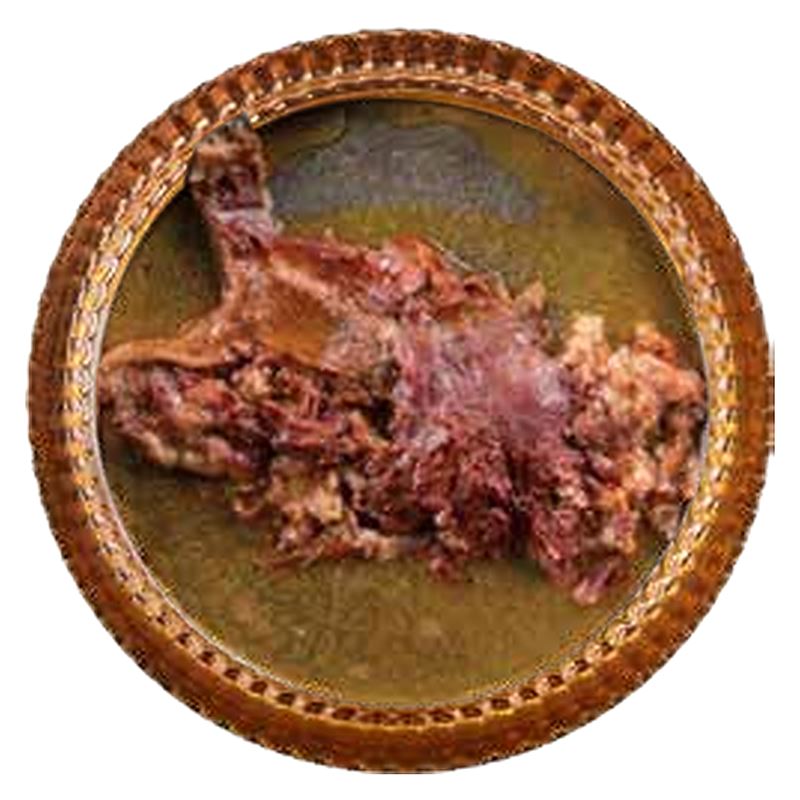
Yes, and it is one of the best uses for it. Kalle pache leaves behind a deep, gelatin-rich broth, and rice cooked in it turns savoury and tea-coloured with a gorgeous crust. Strain the leftover broth through a fine sieve and, if it is very fatty, chill it and lift off the top layer of fat so the rice does not turn greasy. Then simply replace the water, measure for measure, with warm broth. Because the broth is already salted and rich, cut the added salt to a pinch and drop the butter to 1 tablespoon. A pinch of turmeric and a little shredded cooked meat stirred through turns it into a full one-pot meal, closer to a Persian dami. Everything else — the boil, the drizzle, the towel-wrapped dam — stays exactly the same.
Prefer to skip the pot?
Kateh is genuinely easy, but the slow-cooked kalle pache that gives you that magic broth is a 14-hour job. If you would rather let us handle that part, we simmer it the traditional Tehran way every day and are open 24 hours. Note that kalle pache itself is classically eaten not with rice but with warm sangak bread for dipping, sharp torshi and seven-year garlic pickle to cut the richness, and a glass of doogh — all of which you can add from the menu and order page for delivery across Dubai, pickup or dine-in. Cook the kateh at home for lunch and let us handle the dawn broth, or reserve a table and make a morning of it.
