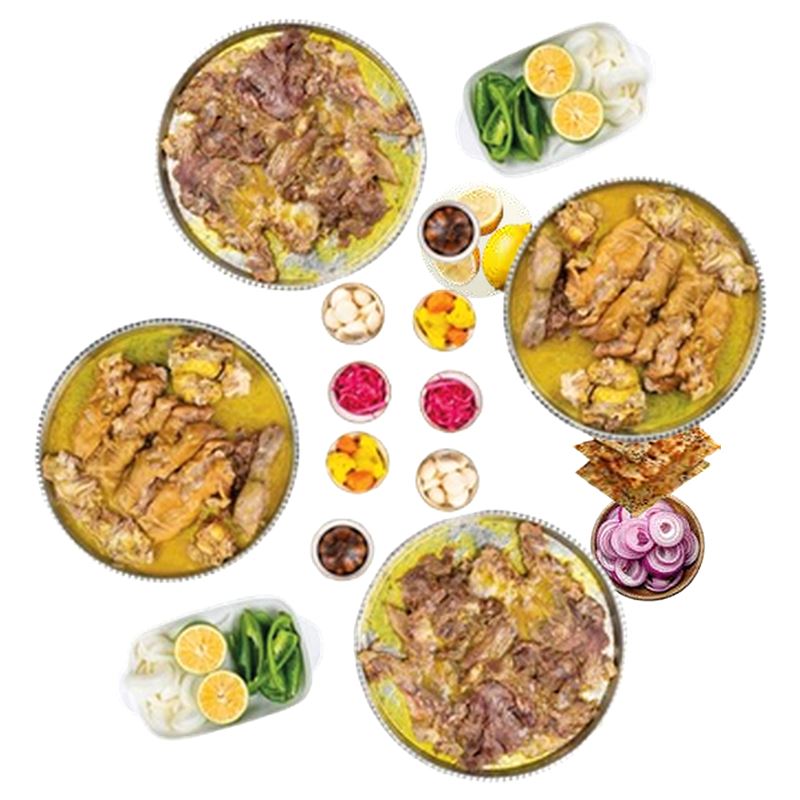
What is Estamboli polo?
Estamboli polo (استانبولیپلو), also called dami gojeh, is one of Iran's most beloved everyday dishes: a one-pot rice cooked together with sauteed onion, tomato paste, potato and green beans, so every grain turns a warm brick-red and tastes of tomato. It is cheap, forgiving and deeply homey — the kind of food an Iranian grandmother makes when the fridge is nearly empty but everyone still needs feeding. Unlike the ceremonial layered pilafs, it asks for no special skill, and it rewards you with a crisp tahdig at the bottom.
The name nods to Istanbul, but the dish is thoroughly Iranian. What really matters is the technique word behind it: dami, meaning cooked gently in its own trapped steam rather than parboiled and drained. If you can measure water and be patient for forty minutes, you can make it.
What ingredients do you need?
These quantities serve four to five people. Meat is genuinely optional — a good Estamboli polo is a star vegetarian dish, and the potato and beans carry it.
- 2 cups basmati rice (about 400 g), rinsed until the water runs clear
- 1 large onion, finely chopped
- 250 g minced beef or lamb (optional), or cubed stewing meat
- 2 medium potatoes — one diced small for the body, one thinly sliced for tahdig
- 150 g green beans, trimmed and cut into 2 cm pieces (fresh or frozen)
- 2 tablespoons tomato paste, plus 1 grated fresh tomato if you have one
- 1 teaspoon turmeric
- 1/2 teaspoon cinnamon (the quiet secret of this dish)
- 1/4 teaspoon ground saffron, bloomed in 3 tablespoons hot water
- 4-5 tablespoons cooking oil or ghee, divided
- Salt and black pepper to taste; a pinch of chilli if you like heat
- Hot water for cooking (about 2 1/2 cups)
How do you make Estamboli polo step by step?
This is the reliable one-pot dami method: the rice goes in raw and cooks in measured water, so nothing is drained. Read it once before you start so the timing feels calm.
- Rinse and soak. Wash the rice in a few changes of water, then soak it in salted water for 30 minutes while you prep. Soaking gives softer, longer grains.
- Build the base. In a heavy non-stick pot, heat 3 tablespoons oil and fry the onion over medium heat until soft and golden, about 8 minutes. If using meat, add it now and cook until it changes colour and any liquid dries off.
- Bloom the spices and tomato. Stir in the turmeric, cinnamon, salt and pepper for 30 seconds, then add the tomato paste and grated tomato. Fry the paste for 2-3 full minutes — this kills the raw, tinny taste and deepens the colour.
- Add the vegetables. Stir in the diced potato and green beans, coat them in the sauce, then pour in about half a cup of hot water. Simmer 8-10 minutes until they start to soften. Taste and adjust salt; keep the mix pleasantly bold, because the rice will drink it in. Set this mixture aside in a bowl.
- Lay the tahdig. Wipe the pot, warm 2 tablespoons oil with 1 tablespoon of the saffron water, and arrange the thin potato slices in a single layer on the bottom. This becomes your crust.
- Combine and mound. Drain the soaked rice and fold it gently into the tomato-vegetable mixture, then pile it onto the potato slices, shaping a gentle dome. Do not press it down.
- Add the cooking water. Pour hot water slowly down the side of the pot until it sits about one finger-width (roughly 1.5 cm) above the rice. Bring it to a boil uncovered on medium heat until the water level drops to the surface of the rice.
- Steam (dam). Poke 3-4 holes through the rice with a spoon handle, drizzle over the remaining saffron water and 1 tablespoon oil. Cover the lid with a clean tea towel, seal tightly, and steam on the lowest heat for 40-45 minutes.
- Rest and flip. Turn off the heat and let it sit 5 minutes. To show off the tahdig, invert the pot onto a wide platter like a cake.
Dami or abkesh: which method should you choose?
Both are authentic. The choice is about texture and effort.
| Feature | Dami (one-pot) | Abkesh (parboiled & drained) |
|---|---|---|
| Effort | Lowest — one pot, no draining fuss | A little more; rice is parboiled and drained |
| Grain texture | Softer, cohesive, homestyle | Fluffier, more separate grains |
| Tomato flavour | Deeper, soaked all through | Slightly lighter |
| Best for | Weeknights, beginners | When you want it to look like a feast |
How do you get the water ratio and tahdig right?
The most common failure is soggy or scorched rice, and both come down to water and heat. Because the rice goes in raw for dami, add hot water only until it sits about one finger-width (1 to 1.5 cm) above the rice, and remember the potato and beans release moisture too — so if in doubt, add a little less. You can always steam longer, but you cannot un-drown rice.
For a golden potato tahdig, use a genuinely low flame and give it the full time — resist lifting the lid. You will smell a nutty, toasty note when the crust is ready. A heat diffuser under the pot helps enormously on strong Dubai gas rings.
What do you serve with it?
Estamboli polo needs almost nothing beside it, but Iranians love a few cool, sharp companions. A crisp Shirazi salad cuts the richness, a spoon of torshi pickles adds tang, and a glass of doogh rounds the meal off. Plain yogurt on the side is never wrong.
A note from our kitchen
We are a Tehran-style kalle pache house at 64 Jumeira Street, Jumeirah 1, open 24 hours a day, seven days a week, and this tomato rice is a home recipe we share for love of Persian cooking — we do not cook or deliver it ourselves. But if a long simmer is not on the cards tonight, you are always welcome to order our kalle pache and sangak across Dubai instead, or book a table and eat it fresh with us.
