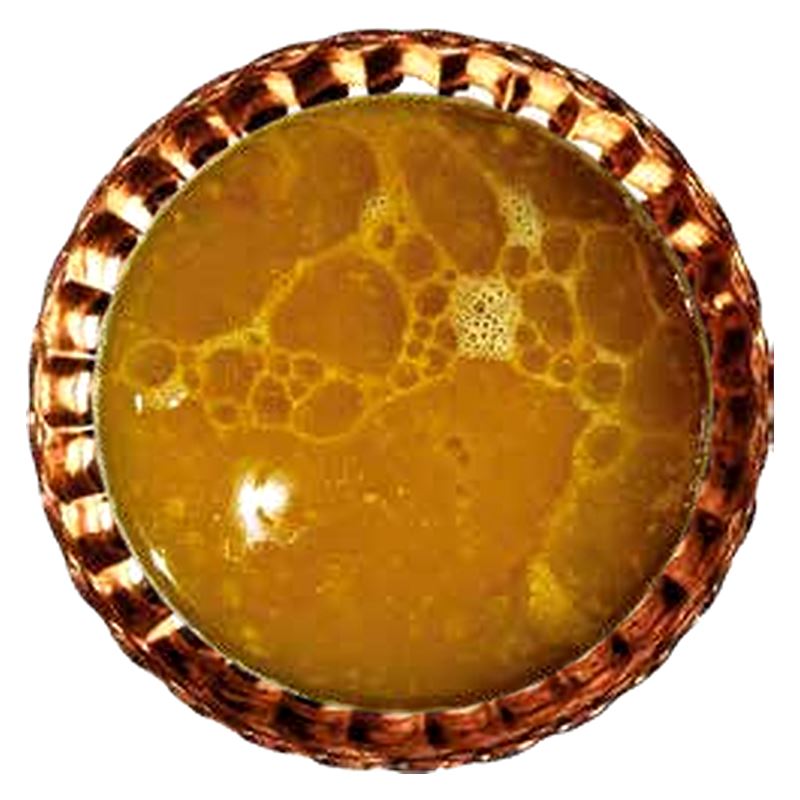
What makes Persian tea different from a teabag?
Persian tea, or chai (چای), is not brewed in a single mug with a bag dunked in and out. It is dam-kesh — loose black tea left to steep slowly in a small pot that sits over gently steaming water, so it stays hot without ever boiling. The result is a clear, deep reddish-amber brew you dilute glass by glass to the strength you like. It is the everyday drink of Iranian homes and teahouses, and the natural close to a rich kalle pache breakfast. This guide covers the authentic method, the ratios, and how to read the colour.
What tea and equipment do you need?
The classic setup is two vessels: a kettle or samovar of boiling water underneath, and a small teapot (qoori) resting on top. The steam keeps the pot warm while the leaves open. You do not need a real samovar — a kettle with a small ceramic or glass teapot that balances on its mouth works well. Use loose-leaf black tea; Persian Lahijan or a Ceylon blend is traditional, often with a hint of cardamom, rose or cinnamon.
This makes enough for four to six small glasses.
- 4–6 heaped teaspoons loose-leaf black tea (about one heaped teaspoon per person)
- About 1 litre fresh cold water for the kettle or samovar
- Optional aromatics: 2–3 lightly crushed green cardamom pods, a few dried rose petals, a small cinnamon stick, or a pinch of Earl Grey if you like bergamot
- To serve: nabat (saffron rock sugar), sugar cubes (ghand), or fresh dates (khorma)
- Equipment: a kettle or samovar, a small ceramic or glass teapot (qoori) that sits on top, and estekan glasses with saucers
How do you brew Persian tea step by step?
The active work is a few minutes; the dam — the steep — is where patience pays off.
- Fill the kettle or samovar with fresh cold water and bring it to a full, rolling boil. Persian tea always starts with truly boiling water.
- Warm the pot: pour a splash of boiling water into the empty qoori, swirl it round, and tip it out. A cold pot dulls the dam.
- Add the loose tea to the warm pot — roughly one heaped teaspoon per person — along with the cardamom, rose or cinnamon if you are using them.
- Pour in just enough boiling water to wet all the leaves, then top the pot up to about two-thirds full and put the lid on.
- Set the teapot on top of the kettle or samovar so the rising steam keeps it hot. Never put the pot on direct heat — boiling the leaves turns the tea bitter and flat.
- Let it steep undisturbed for 10–15 minutes. This is the dam, and it cannot be rushed.
- Check the colour: tip a little onto a white saucer or hold the pot to the light. When the brew is clear and a deep reddish-amber — Iranians call it jā oftādeh, "settled in" — it is ready. A cloudy, muddy surface means it needs longer.
- Pour a measure of the strong brew into each estekan first, then dilute with hot water from the kettle to taste.
- Serve at once in estekan glasses on their saucers, with nabat, a sugar cube or a date alongside. Keep the pot over the steam so refills stay hot.
How do you get the colour right: kam-rang or por-rang?
The beauty of the two-vessel method is that everyone drinks their tea their own way from one pot. The steeped brew is a concentrate; the hot water from the kettle is the dial. For a light glass — kam-rang — add a little brew and plenty of hot water. For a strong, dark glass — por-rang — pour more brew and less water. A well-made dam should always look transparent, never opaque: you should be able to see through the amber to the far side of the glass. If the tea has stood over heat for hours it will taste stewed and bitter; when that happens, start a fresh pot rather than push through it.
How is Persian tea served?
Chai is poured into estekan, small tulip glasses on saucers, so you can admire the colour and hold the glass by its cool rim. It is drunk hot and, traditionally, not stirred with sugar. Instead you take sweetness on the side: a lump of golden nabat (saffron rock sugar) stirred in or sipped through, a sugar cube (ghand) held between the teeth as you drink — the old qand-pahlu way — or a soft date pressed to the roof of the mouth. Plain, unsweetened glasses are just as common between courses.
Why does tea follow a kalle pache breakfast?
Kalle pache is a rich, collagen-heavy dawn meal, and a hot, slightly astringent glass of chai is the traditional way to close it — it cuts through the richness and rounds the meal off. That is why a pot of tea belongs at the end of the table as naturally as sangak and torshi belong at the start. Brewing your own dam at home is genuinely satisfying, but if you would rather let us do the long overnight cooking and the steeping, you can add tea to your order as a drink on our menu and order page. We are open 24 hours in Jumeirah 1 with delivery across Dubai, or you can reserve a table and finish your kalle pache with a fresh estekan of chai the way it is meant to be drunk.
