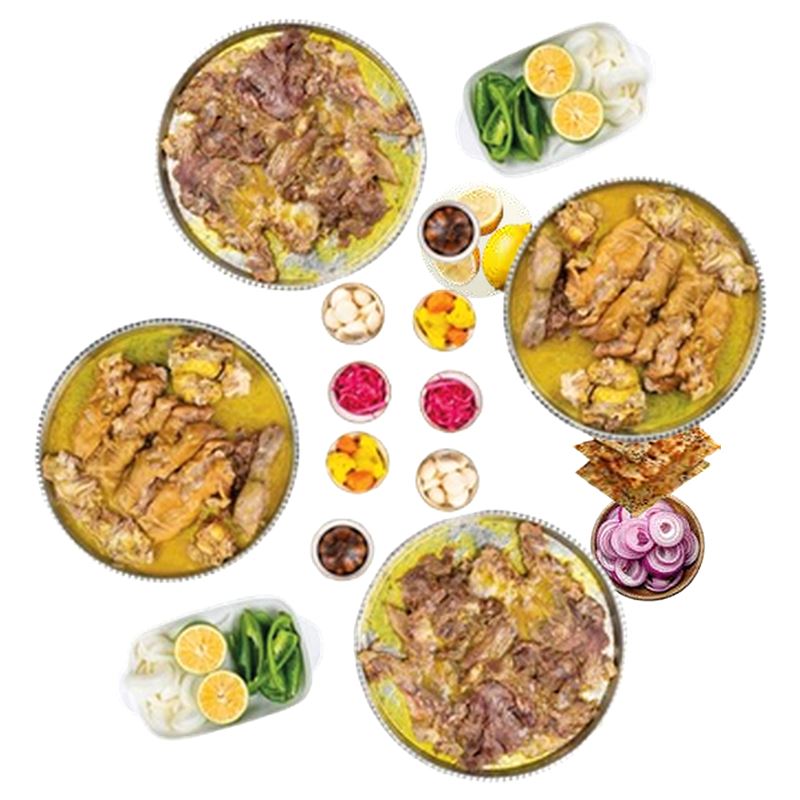
What is on the Shaun the Sheep kalle pache menu?
Kalle pache can look like a mystery from the outside — a warm bowl, torn bread, a dish of pickles — but the menu behind it is simple once someone walks you through it. At Shaun the Sheep, a Tehran-style kalle pache kitchen at 64 Jumeira Street in Jumeirah 1, everything is built from one long, patient pot: lamb head and trotters, hand-cleaned and slow-simmered for about fourteen hours in the classic way. From that pot you can order a single part, a spoonable soup, or a full sharing platter. This guide is our whole menu, explained — every part, every platter, the breads, the sides and the drinks — so you can order with confidence. If you are brand new to the dish, our what is kalle pache guide is a gentle place to start; then come back here and build your order on the menu and order page.
What are the individual parts, and which one suits you?
The heart of the menu is the parts. You can order any of them on their own, in the warm broth, with bread and pickles alongside. Each one has its own character:
- Plain broth (soup) — the clear, golden lamb broth on its own. Light, savoury and restorative; the gentlest way in, and a lovely opener before the richer cuts.
- Meat (goosht) — tender pulled meat from the head. Familiar and straightforward, this is the pick for anyone who wants classic slow-cooked lamb without the softer specialty cuts.
- Tongue (zaban) — smooth, dense and mild, sliced into firm rounds. A quiet delicacy that even careful eaters tend to enjoy.
- Cheek (bonagoosh) — the crowd favourite. Slow cooking turns it silky and melting, all tender meat. If you order one thing, make it this.
- Brain (maghz) — soft, creamy and custard-like, gently rich. Loved by anyone who leans toward the softest textures.
- Eye (cheshm) — the connoisseur's piece: small, soft and gelatinous. It is the adventurous order, loved by those who already know and love the dish.
- Tripe (sirabi) — honeycombed and springy, with a satisfying chew that stands apart from the softer parts. One for texture lovers.
- Trotters (paye) — the silky, gelatin-rich feet that give the whole broth its famous body. Sticky, soft and deeply comforting.
- Meat-and-fat — meat carrying its rendered fat, the richest and most warming choice, deeply savoury for a cold night or an early morning.
- Special Mix — a little of everything in one bowl. The best first order: it lets you taste cheek, tongue, brain and more, then decide your favourite for next time.
- Brain soup — brain served in broth, gentle and creamy in a spoonable form; easy, warming and mild.
The table below lines the parts up side by side, so you can find your texture and comfort level at a glance.
| Menu item | What it is | Texture | Best for |
|---|---|---|---|
| Plain broth (soup) | Clear lamb broth | Light, brothy | First-timers, a gentle opener |
| Meat (goosht) | Pulled head meat | Tender, familiar | Lovers of classic lamb |
| Tongue (zaban) | Sliced lamb tongue | Smooth, firm | Cautious eaters; a mild delicacy |
| Cheek (bonagoosh) | Lamb cheek | Silky, melting | Almost everyone; the all-rounder |
| Brain (maghz) | Lamb brain | Soft, custardy | Fans of rich, soft textures |
| Eye (cheshm) | Lamb eye | Soft, gelatinous | The adventurous palate |
| Tripe (sirabi) | Honeycomb stomach | Springy, chewy | Texture seekers |
| Trotters (paye) | Lamb feet | Gelatinous, silky | Anyone who loves the broth's body |
| Meat-and-fat | Meat with rendered fat | Rich, warming | The biggest appetites |
| Special Mix | A bit of everything | Varied | First orders and the undecided |
| Brain soup | Brain in broth | Creamy, spoonable | A soft, gentle bowl |
What are the platter sizes: Single, Double, Full and the Khan?
When you are feeding more than yourself, the parts come together as sharing platters that scale with your table. The Single is a complete meal for one; the Double is built for two to share; the Full is the family platter, generous enough for around three; and the Khan is the grand centrepiece for a group. Each arrives as a Tehran-style spread with bread, so everyone can tear, dip and pass the dishes around. For exactly what goes on each one and how to pick between them, our platters explained guide walks through all four in detail.
Which bread should I order: sangak or Special Sangak?
Bread is not a side with kalle pache — it is the spoon, the plate and half the pleasure. Every order comes with sangak, the traditional Iranian flatbread baked on a bed of hot stones, with a chewy, slightly blistered crust made for tearing and dipping into the broth. If you want a little more of an occasion, the Special Sangak is the same great bread, more generously topped, so there is extra to load with cheek, brain or a scoop of broth. For a big platter, order plenty — bread disappears faster than you expect.
What sides and drinks complete the table?
The classic partners are there to balance the richness. The seven-year garlic pickle is the prize: mellow, aged and deeply savoury, its soft sharpness cuts straight through the fatty broth, and other torshi (mixed pickles) do the same lively job. To drink, doogh — the savoury, minty yoghurt drink — is the traditional match, while Persian tea (chai), fresh lemonade and sharbat, and soft drinks are all on hand. Kalle pache is a hearty, warming meal; this is general information about a traditional dish, not medical or nutritional advice.
How do I put together my order and get it in Dubai?
Ordering is simple. Choose your parts or a platter, add bread, torshi and a drink, and check out on the menu and order page. For delivery, pick your Dubai area and drop a map pin so the rider finds your door, then pay securely by card online; the rider calls you on arrival. You can also schedule a future time if you are planning ahead — kalle pache is a beloved pre-dawn and breakfast tradition. We are one kitchen, open 24 hours, seven days a week, delivering across all 141 areas of Dubai, with the fee shown by area at checkout and delivery free over AED 300. Prefer to eat with us or collect in person? Pickup and dine-in are always open, and you can reserve a table. Still deciding on your first single? Our which single to order guide helps you choose.
