What actually makes Persian food "authentic" in Dubai?
Dubai is full of places that put "Persian" on the sign. Some cook the way a grandmother in Tehran would; others serve a softened, sped-up version built for a quick photo. If you have ever finished a meal wondering whether you tasted the real thing, this guide is for you. We run a Tehran-style kalle pache kitchen at 64 Jumeira Street, Jumeirah 1, and we would rather teach you what to look for than simply ask you to trust us.
Authenticity is not a mood or a logo. It shows up in time, in the parts on the plate, and in whether the food is made fresh for you. Here is how to read the signs.
Sign one: does the broth actually take time?
Real kalle pache cannot be rushed. Traditional Tehran-style broth comes from lamb head and trotters, hand-cleaned and slow-simmered for about fourteen hours until the flavour is deep and the texture is right. That is not a marketing number; it is simply how the dish is made properly.
A touristy version cuts the clock. It leans on a thin, quick stock, or reheats something that has been sitting, and hopes garnish covers the gap. When broth is genuinely slow-cooked, you can taste the patience in it. When it is not, it tastes flat and one-note no matter how it is dressed up.
Sign two: are the real parts even on the menu?
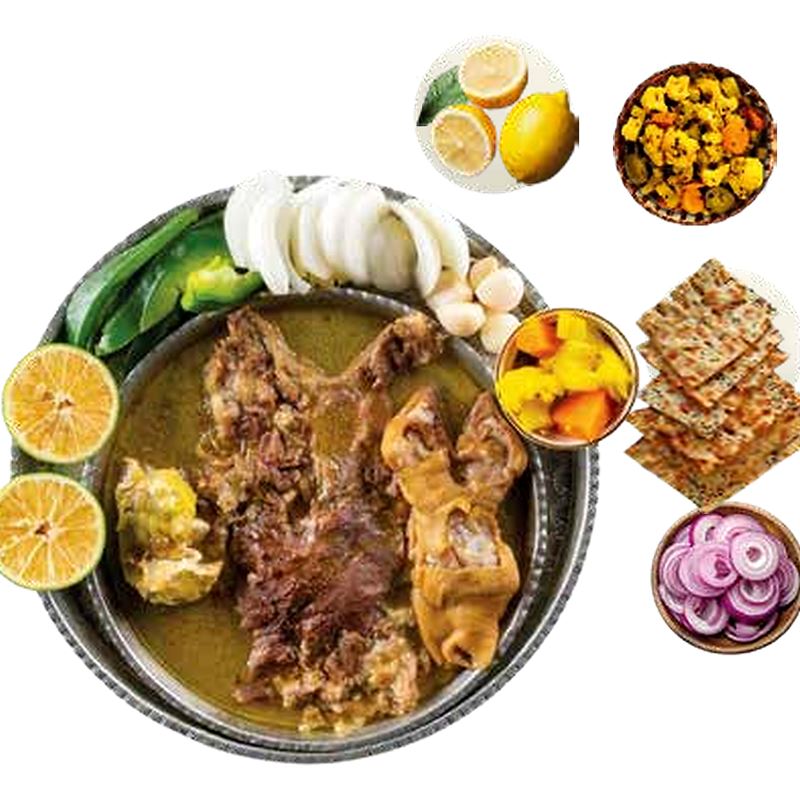
The clearest tell of all is the menu itself. A kitchen that respects the tradition lets you choose your parts: plain broth, meat (goosht), tongue (zaban), cheek (bonagoosh), brain (maghz), eye (cheshm), tripe (sirabi), trotters (paye), meat-and-fat, a brain soup, and the Special Mix that gives you a little of everything.
A touristy menu quietly removes anything unfamiliar and offers one generic "lamb bowl" that would not remind anyone of a Tehran breakfast table. If the parts are missing, the tradition has been trimmed to fit a tourist's comfort zone. New to all of this? Our guide to what kalle pache actually is walks you through each part in plain language.
Sign three: is the bread, torshi and doogh done right?
Kalle pache is a full table, not just a bowl. The bread should be sangak, the traditional stone-baked flatbread you tear and dip; we also serve a Special Sangak with a more generous topping. Alongside it belong torshi (pickles, including a seven-year garlic pickle) and doogh, the savoury yogurt drink that cuts the richness.
The touristy tell is a plain dinner roll, a sugary bottled soda instead of doogh, and no torshi at all. Those small companions are not extras; they are the framework of the meal, and their absence usually means corners were cut everywhere else too. If you want the full ritual, our note on sangak, torshi and doogh explains why each one belongs.
Authentic sign vs touristy tell: a quick table
| Authentic sign | Touristy tell |
|---|---|
| Broth slow-simmered about 14 hours | Thin, quick stock or reheated leftovers |
| You choose real parts — tongue, cheek, brain, trotters, Special Mix | One generic "lamb bowl," nothing unfamiliar |
| Torn sangak (and Special Sangak) to dip | A plain dinner roll on the side |
| Torshi and doogh on the table | Bottled soda and no pickles |
| Made fresh to order | Pre-plated and left waiting |
| Menu names things in specifics | Vague, simplified, slogan-heavy menu |
How can you tell before you even order?
Read the menu closely. Does it name the parts, or hide them? Does it mention sangak, torshi and doogh, or default to bread and cola? Is the food described as made to order, or does it feel pre-plated? A kitchen proud of its tradition tends to say so in specifics, not slogans. If you are ordering for the first time, our first-timer's guide will help you enjoy every bite.
So where does Shaun the Sheep stand?
We are a single Tehran-style kalle pache kitchen, open twenty-four hours, seven days a week. Every bowl is the traditional lamb head-and-trotters, hand-cleaned and slow-simmered about fourteen hours, served as a warm broth with the parts you choose, torn sangak, torshi and doogh. You pick your parts and, for sharing, your platter size — Single for one, Double for two, Full for around three, or the Khan for a group. Nothing is watered down for a "tourist palate," because this is simply how we cook.
We deliver across all of Dubai, and offer pickup and dine-in too. Order online, pick your area and drop a map pin so the rider finds your door, pay securely online by card, and follow your order on the confirmation page; the rider calls you on arrival. Prefer a later time? You can schedule a future slot. Delivery is free over AED 300, with the fee set by your area at checkout.
Ready to taste the difference?
You do not have to take anyone's word for what "authentic" means — now you can taste it and judge for yourself. Start your order on our order page, or if you would rather sit down with a full table, book on our reservation page. Real broth, real parts, real sangak. That is the whole idea.
