What does a Persian recipe actually mean by "a pinch"?
It means this: the amount is not what decides whether the dish works. A pinch is whatever you lift between thumb and forefinger, and for most hands that lands somewhere under a gram. But the number is not the message. The word is there to tell you the cook who wrote it down was not worried about this ingredient, and neither should you be.
That is the grammar of Persian home cooking. A recipe is vague exactly where the amount is forgiving and precise exactly where it is not. Read it that way and "a pinch, a handful, to taste" stops being either charming or infuriating and starts being information.
Why do Persian recipes leave so much unmeasured?
Not out of carelessness. Most of these recipes travelled by demonstration long before anyone wrote them on paper, and a written version is a compressed demonstration: it keeps the parts you cannot work out by looking and drops the parts you can.
Nobody needs to be told how much onion goes in. You can see the pot. What you cannot see is whether the rice has enough water, or whether the fenugreek has already gone too far. Those get numbers. Everything else gets a word.
Which words mean "this amount barely matters"?
The vocabulary is smaller than it looks, and each term carries a different width of tolerance.
| The instruction | Roughly what it looks like | How much room you have |
|---|---|---|
| A pinch | Thumb and forefinger, once | Wide for herbs, narrow for salt |
| A handful | A loosely cupped palm | Very wide — double it and the dish is still right |
| A little | Less than you were about to use | Wide, but the word is a warning |
| A splash | One tip of the jug, no pause | Wide, and reversible by cooking it down |
| A drizzle | A thin thread, poured moving | Wide — it sits on top, not inside |
| Enough to cover | Liquid a finger above the solids | Set by your pot, not by the recipe |
| To taste | Not an amount at all | You decide, in small steps |
Notice that "a little" is doing something different from the rest. It is not describing a quantity, it is telling you the ingredient is stronger than you think.
Which Persian ingredients are forgiving, and which are not?
The dividing line is simple. Anything you can still add at the end is written loosely. Anything that cannot be taken back out is written tightly.
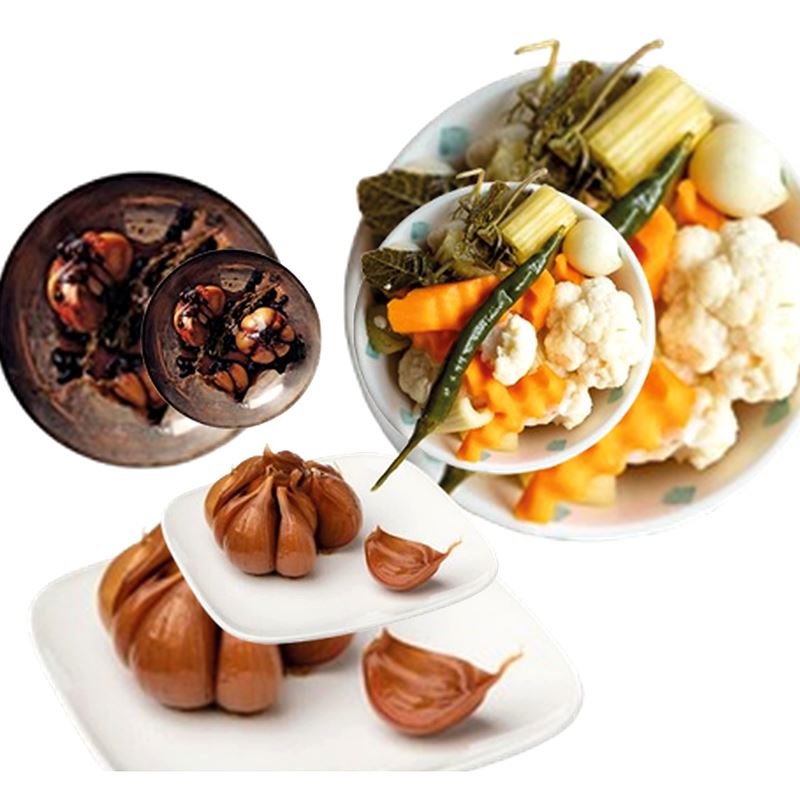
Forgiving: onions, fresh herbs, parsley and coriander and leek greens, garlic in a long-cooked pot, water in a slow simmer that you top up anyway, bread on the table, torshi beside the bowl. Double the herbs in a stew and you get a greener, thicker stew, not a wrong one.
Unforgiving: salt, saffron, dried fenugreek, dried lime, cinnamon, rose water, and the water-to-rice ratio. These do not scale politely. Push past the right amount and they stop tasting like themselves and start tasting like a mistake.
Our ghormeh sabzi recipe shows both sides in a single ingredient list: the fresh herbs are measured in bunches and handfuls, the dried fenugreek in tablespoons. Same pot, same cook, two completely different levels of care — because too much fenugreek turns the whole thing bitter and there is no rescuing it.
What does "enough to cover" actually tell you?
It is a ratio expressed as geometry. The recipe cannot know your pot, and the quantity of water that covers a lamb shank in a narrow pot will not cover it in a wide one. So instead of a number that would be wrong for most readers, you get the condition the number was meant to produce: the solids stay submerged.
The same logic runs through our kateh recipe, where the rice-to-water ratio is pinned to the cup and the millilitre — and then the very next clause says a splash more if you like it softer. The ratio is load-bearing. The splash is preference.
How do you calibrate a handful to your own hand?
Do it once, deliberately, and you never have to think about it again.
- Pinch salt onto a teaspoon the way you normally would, then look at how much of the spoon it filled. That is your pinch, permanently.
- Take a handful of dried mint and tip it into a measuring spoon. Most hands land between one and three tablespoons.
- Pour a "splash" of water into a measuring jug. Yours is probably 15 to 30 millilitres and it will be the same tomorrow.
Your hand does not need to match anyone else's. It needs to match itself, which it already does. That consistency is the thing the original cook had and the reason the vague instruction worked for them.
Why is "to taste" always written last?
Because it is not a measurement, it is an instruction to run a loop: add a small amount, stir, taste, decide. It appears at the end because the dish has to be finished before the loop makes any sense — broth reduces, salt concentrates, sourness fades.
Kalle pache is one of the clearest examples, because the seasoning is often not finished in the kitchen at all. It is finished by the person eating, at the table. Our guide to the order to add lime, garlic, cinnamon and salt sets out the sequence, and the sequence is the reason the loop works.
Can a vague recipe be written down as a precise one?
Partly, and our own recipes do it half and half. In our mast-o-khiar recipe the yogurt is 500 g and the salt inside the bowl is half a teaspoon, but the salt used to draw water out of the cucumber has no number, because it gets rinsed away again. The water that loosens the dip is "a splash". The olive oil on top is "a drizzle". The numbers land precisely where a mistake would be permanent.
The honest limit is worth saying. Turning every word into a number makes a recipe portable and very slightly worse, because someone who follows the numbers gets a good dish every time and never learns which lever to pull when the pot needs help.
Do you need any of this to eat kalle pache in Dubai?
No. At Shaun the Sheep on 64 Jumeira Street in Jumeirah 1, the broth has already had its fourteen or so hours, and the only measuring left is the kind you do with your own tongue, a little at a time. The kitchen is open 24 hours, every day, for dine-in, pickup and delivery across 141 Dubai areas. Anything the site does not answer, call 04 321 8882 and ask.
