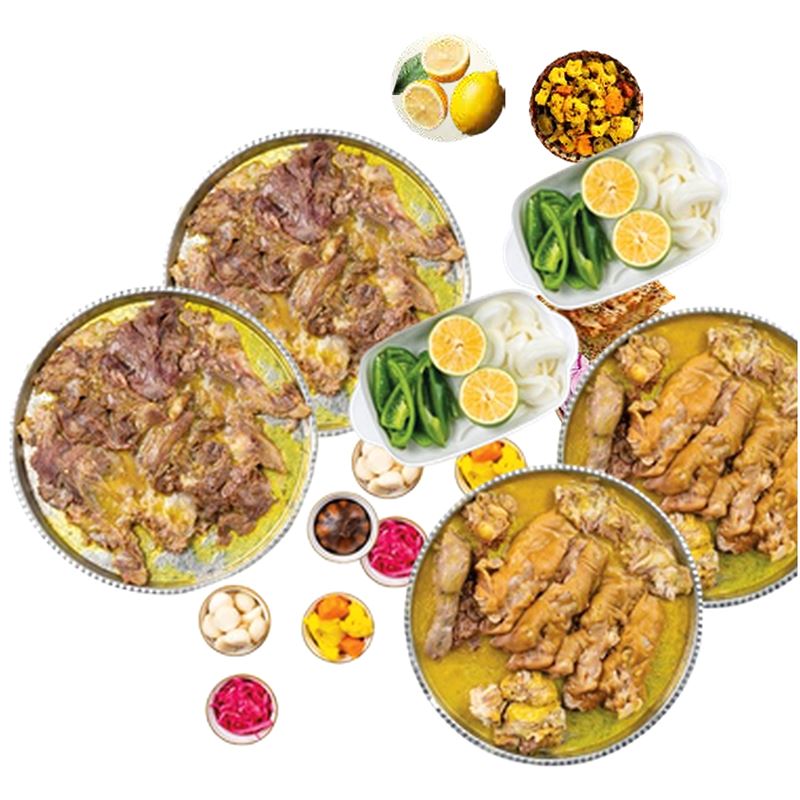
Kalle pache is a traditional Tehran-style breakfast broth made from lamb head and trotters, hand-cleaned before dawn and slow-simmered for around fourteen hours until the liquid turns the colour of strong tea. It is one of the oldest comfort foods of the Iranian table — and at Shaun the Sheep on Jumeira Street, it is served exactly the way Tehran's dawn kalle-pache houses have made it for generations.
What is kalle pache, and where does it come from?
The name is beautifully literal. In Persian, kalle (کله) means head and pache (پاچه) means trotters — together, the whole animal honoured with nothing wasted. Across the Gulf and Iraq the same dish is loved as baja (الباجة), while in Iran the trotters served on their own are simply paye (پاچه). It is a food born of thrift and respect, turning humble cuts into something rich, restorative and deeply satisfying.
Why do Iranians eat kalle pache at dawn?
For centuries, kalle pache was the food of early risers — bazaar traders, night workers and travellers who needed warmth and strength before sunrise. Specialist shops, the kalle-pazi, would open in the dark hours, steam fogging their windows, ladling out bowls of pale golden broth with warm bread. It was never fast food; it was a ritual. That is why, for so many Iranians in Dubai, one spoonful carries the whole memory of a Tehran morning.
What makes it taste like home?
Authenticity lives in the patience. At Shaun the Sheep the lamb is cleaned before dawn and simmered in a heavy copper pot with onion, turmeric and garlic, skimmed by hand every hour so the broth stays clear and clean. Nothing is rushed. The result is a silky, collagen-rich soup that many people have long valued as a warming, restorative start to the day. The lamb is halal, as all meat sold in the UAE is by law.
What is on the table at Shaun the Sheep?
The menu reads like a tour of the whole tradition: tender brain, tongue, trotters, tripe, lamb cheek, eye for the connoisseur, brain soup and a clear plain broth. Newcomers often start with the Special Mix, a little of everything. Around it come the essentials that make the meal complete:
- Sangak — warm stone-baked flatbread for dipping.
- Seven-year garlic torshi — aged pickle that cuts the richness.
- Doogh — cool salted yogurt drink to balance every bite.
Communal platters are built to be shared, serving 1, 2, 3 or 6 people — because kalle pache has always been food for a table, not a plate.
Baja, kalle pache or paye — what is the difference?
| Name | Region | What it means |
|---|---|---|
| Kalle pache (کلهپاچه) | Iran | Full dish: head and trotters together |
| Baja (الباجة) | Gulf & Iraq | The same slow-cooked head-and-trotter dish |
| Paye (پاچه) | Iran | Trotters served on their own |
Where can I find authentic Iranian kalle pache in Dubai?
Shaun the Sheep sits at 64 Jumeira Street, Jumeirah 1, and keeps the old rhythm alive by staying open 24 hours, 7 days a week — so you can honour the dawn tradition or simply satisfy a late-night craving. Dine in for the full ceremony, collect on your way home, or order delivery across Dubai. You can order online here, and for a table with friends or family you can reserve in advance. Whether it tastes like home or is a first, curious discovery, the pot has been simmering since before dawn — waiting for you.
