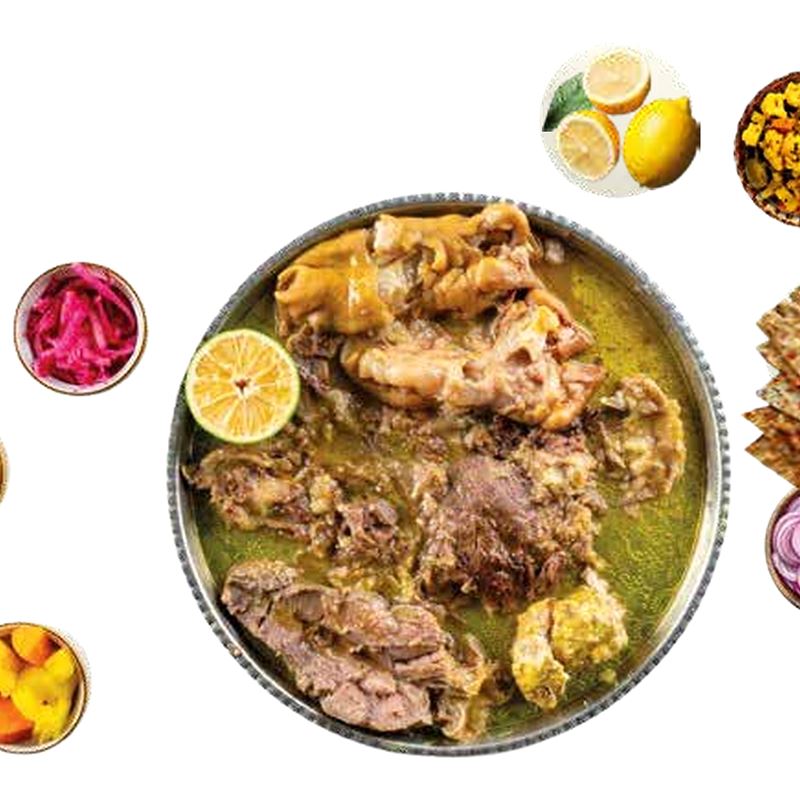
What is the meat (goosht) option in kalle pache?
In a bowl of kalle pache, goosht (گوشت) simply means the plain lamb meat — the soft muscle meat lifted from the head and neck of the lamb after it has simmered for hours. It is not an organ and it is not an unusual cut; it is lamb, cooked long and low until it turns meltingly tender. Around the skull, jaw and neck sit ribbons of well-worked muscle that most people never think about, and when those are slow-cooked they become some of the most flavourful meat on the animal. On our menu, the meat (goosht) option is exactly that: honest, tender, stewed lamb, served in the same rich broth as the rest of the dish.
If the words "kalle pache" make you a little nervous, this is the part written for you. There is no brain, no tongue and no trotter here — just meat that tastes the way a great slow-cooked lamb should. You can order it on its own from the menu and order page, and it is the single most reassuring way to try the dish for the first time.
How is goosht different from the cheek and other parts?
People sometimes mix up goosht with bonagoosh, the lamb cheek. They are close cousins but not the same thing. The cheek is one specific, prized muscle on the side of the head, with a slightly gelatinous, pull-apart character. Goosht is the broader plain meat gathered from the head and neck — a little leaner and even more straightforward, closer to what you would picture as ordinary stewed lamb. Both are the reassuring, meaty parts of kalle pache; goosht is simply the plainest and most familiar of all.
What does the meat (goosht) taste and feel like?
Taste it with your eyes closed and you would call it a very good lamb stew. The flavour is clean, savoury and deeply lamby, without the concentrated sweetness of the cheek or the richness of the marrow parts. The texture is soft and tender, coming apart in gentle strands under a fork or a piece of bread, never chewy. Because it has spent long hours in the pot with onion, turmeric and garlic, it carries the warm, tea-coloured broth right through the meat. It is the most everyday, comforting texture on the menu — nothing surprising, nothing to negotiate, just soft lamb and good broth.
A quick look: goosht versus the other parts
Every part of kalle pache has its own personality. This short comparison shows where the plain meat sits.
| Part | Texture | How it eats | Best for |
|---|---|---|---|
| Meat (goosht) | Soft, pulls into strands | Like a plain lamb stew | Offal-nervous eaters and children |
| Cheek (bonagoosh) | Fork-tender, slightly gelatinous | Rich braised lamb | Meat lovers |
| Tongue (zaban) | Firm yet tender, sliced | Mild and meaty | Cautious newcomers |
| Brain (maghz) | Soft, custard-like | Rich and buttery | Adventurous eaters |
How do you eat goosht within a bowl of kalle pache?
The ritual is simple. Tear a piece of warm sangak, scoop up a little meat and broth together, and eat them in one bite so the bread drinks up the liquor. A squeeze of fresh lime lifts everything; a dab of seven-year garlic pickle or a forkful of mixed torshi adds a sharp, tangy edge; and cold doogh keeps the whole thing light. Goosht needs no knife — it is meant to be pulled apart with bread or a spoon. Ask for a little extra broth if you like to keep spooning it over the meat and bread as you go.
Who loves the meat option, and who might find it too plain?
Goosht is the great crowd-pleaser. It is the natural choice for anyone who feels unsure about offal, for guests trying kalle pache for the first time, and above all for children, who almost always accept it happily because it tastes like the lamb they already know. Older diners and anyone who simply prefers something mild and familiar love it too. The only people who might find it a touch plain are the seasoned kalle pache fans who come specifically for the richer, more unusual parts — for them, goosht is best enjoyed as one element of a mixed platter rather than the whole meal. Paired with torshi, lime and sangak, though, even the simplest bowl of meat is deeply satisfying.
How do I order goosht at Shaun the Sheep?
You have a few easy options. Order the meat (goosht) on its own if you want to keep things simple, or choose the Special Mix, which brings the plain meat together with other cuts on one platter so cautious and adventurous eaters can share the same table happily. Platters serve one, two, three or six people, which makes goosht an easy anchor for a family meal — order it plain for the children and a mix for everyone else. Round it out with special sangak, mixed torshi, seven-year garlic pickle, and doogh, lemonade or tea, and add an abgoosht (dizi) if you would like a second dish alongside. If you would rather have the whole spread in front of you at the table, you can reserve a table.
We are one kitchen at 64 Jumeira Street, Jumeirah 1, open 24 hours a day, seven days a week, and we deliver to every area in Dubai, with the fee shown by area at checkout and delivery free on orders over AED 300. Pickup and dine-in are always available, and you can schedule an order ahead for a time that suits you. Payment is by secure card online.
Is the lamb halal, and how is the meat cooked?
Yes. The lamb we serve is halal, in line with UAE law and standards. The meat is prepared the traditional Tehran way: everything is hand-cleaned before dawn, then simmered gently for around fourteen hours in a copper pot with onion, turmeric and garlic, and skimmed through the night until the broth turns the colour of strong tea. That long, unhurried cooking is exactly why the goosht falls apart so easily — there are no shortcuts, only time and low heat. Whenever you are ready to try it, browse the full selection on the menu and order page.
