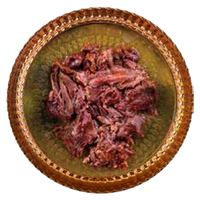
Kalle pache is a protein-rich, collagen-heavy Persian broth made by slow-cooking lamb head and trotters, and what ends up in your bowl depends entirely on the cut you choose. It is one of Tehran's oldest comfort foods, and at Shaun the Sheep in Jumeirah we cook it the traditional way: hand-cleaned before dawn, simmered for about fourteen hours in a copper pot with onion, turmeric and garlic, and skimmed hourly until the broth turns the colour of strong tea. For anyone watching their protein or curious about collagen foods in Dubai, it is worth understanding what that long simmer actually puts on your spoon.
What is kalle pache from a nutrition point of view?
Nutritionally, kalle pache is best understood as two things at once: tender cuts of lamb that supply high-quality animal protein, and a bone-and-trotter broth that supplies gelatin, the cooked form of collagen. The head (kalle) gives you meat such as cheek and tongue, while the trotters (paye) are almost all connective tissue and bone. Because the dish is built on whole cuts rather than a standardised recipe, there is no single calorie or gram figure that applies to every order. The honest answer to "how many calories in kalle pache" is: it depends on the cut and the portion. If that is the question you came with, is kalle pache fattening? goes through the calorie picture cut by cut and how to eat it lighter.
Is kalle pache high in protein?
Yes, kalle pache is naturally high in protein, because lamb meat and connective tissue are both protein-dense foods. The tongue, cheek and mixed-meat portions deliver classic muscle protein, while the broth carries dissolved gelatin, a protein derived from collagen. Many active people value this combination for a meal that feels substantial without needing a plate of sides. If you are training or simply want a protein-forward meal, a mixed portion with plenty of meat is the intuitive choice. We don't publish exact protein grams, because the real number shifts with which cuts you pick and how large a communal platter you share.
Where does the collagen come from?
The collagen in kalle pache comes from the bones, trotters and connective tissue that simmer for roughly fourteen hours. During that long, gentle cook, collagen breaks down into gelatin, which is what gives a good broth its silky body and, when cooled, its natural set. This is exactly why bone broths and trotter dishes are talked about as collagen foods. We describe this qualitatively on purpose: the amount that ends up dissolved in any given bowl varies with the simmer, the cut and the portion, so we avoid quoting numbers we cannot stand behind. What we can say is that a dish built on paye is, by its nature, gelatin-rich. For the separate question of whether any of that gelatin does anything for skin or joints, kalle pache, collagen, skin and joints takes an honest look at the bone-broth claims.
Which parts are lighter and which are richer?
The plain broth is the lightest way to enjoy kalle pache, while the brain is the most indulgent. If you want something clean and warming, a bowl of plain broth or brain soup with sangak bread is a gentle place to start. If you are after richness, the brain has a soft, buttery texture that regulars love. Everything in between, from tongue to trotters to the Special Mix, sits on a spectrum. The table below is a qualitative guide, not a calorie chart.
| Choice | Character | What it's known for |
|---|---|---|
| Plain broth | Lightest, warming | Gelatin from the long simmer |
| Trotters (paye) | Silky, gelatinous | Collagen and connective tissue |
| Tongue & cheek | Lean, meaty | Straightforward lamb protein |
| Brain | Richest, buttery | Soft texture, an indulgent treat |
| Special Mix | Balanced variety | A little of everything |
How does kalle pache fit an active lifestyle?
Kalle pache fits an active lifestyle as a warm, protein-forward meal that many people reach for as a restorative bowl after a long day or an early start. Traditionally it is a dawn food, eaten before the day's work, and that reputation as a fortifying breakfast has followed it for generations. Pair a meat-rich portion with sangak bread for slow-release energy, a glass of doogh, and some seven-year garlic pickles to cut through the richness. It is a whole-food, minimally processed meal, and in the UAE the lamb is halal. Ready to try it? You can order across Dubai or book a table, or plan a group visit through our reservations page.
The doogh and pickles are not an accident: in the Persian tradition of warm and cold foods, kalle pache counts as a warming (garm) dish that the table balances with cooling doogh and torshi.
