What is reshteh polo, and why do Iranians make it for Nowruz?
Reshteh polo — «رشتهپلو», literally "noodle rice" — is a fragrant Persian pilaf in which toasted flat wheat noodles are folded through saffron basmati and steamed until the grains stand separate and the base crisps into tahdig. It is a dish that carries a message. The Persian word «رشته» means both "noodle" and "thread," and at the New Year table it holds a wish: to take the threads of your life and your affairs firmly into your own hands for the year ahead — in Persian, «رشتهی کار را به دست گرفتن». For that reason families traditionally cook it around Nowruz, the Persian New Year, and many serve it on the last night of the old year or before a big undertaking — a new job, a journey, an exam — so the coming months unspool in the right direction. It is comfort food with a quiet blessing folded through it.
What is reshteh, and where do you find it in Dubai?
The noodle here is reshteh polo — a dried, flat, brittle wheat noodle sold in tied bundles, longer and firmer than the softer reshteh ash used for the herb soup ash reshteh. For this recipe you want the polo type; the packet usually says so. In Dubai you will find it in almost any Iranian or Afghan grocery, and in the Persian aisle of the larger supermarkets. If you genuinely cannot find it, flat egg noodles or even broken linguine will stand in, though the snap and flavour are not quite the same. Whatever you use, the one step you cannot skip is toasting: raw noodles taste of plain flour, while toasted ones smell of fresh biscuits and give the finished rice its signature nutty aroma.
What ingredients do you need?
This makes a generous platter for four to five. If you want the meat version, start the lamb first, as it needs the longest cooking; the rice itself is a standard chelo with the toasted noodles folded in.
- 3 cups (about 600 g) long-grain basmati rice
- 150 g Persian reshteh polo noodles, snapped into 3–4 cm pieces
- 2 tablespoons salt for the parboiling water, plus 1 tablespoon for soaking
- 4 tablespoons neutral oil, such as sunflower
- 2 tablespoons butter, for the tahdig base
- 1/2 teaspoon ground saffron, bloomed in 3 tablespoons hot water
- For toasting the noodles: 2 tablespoons butter or oil
- For the garnish: 100 g soft pitted dates, halved; 3 tablespoons golden raisins; 2 tablespoons butter; a generous pinch (about 1/4 teaspoon) of ground cinnamon
- Optional, for the meat version: 300 g boneless lamb or beef in small cubes; 1 onion, finely chopped; 1/2 teaspoon turmeric; 1/2 teaspoon cinnamon
- Optional to finish: slivered pistachios or almonds
- Equipment: a heavy nonstick pot with a tight lid, a colander, a clean tea towel and a flat serving platter
How do you make reshteh polo step by step?
- Rinse the rice in cold water four or five times until the water runs almost clear, then soak it with 1 tablespoon salt for at least 1 hour.
- If you are making the meat version, brown the onion in a little oil, add the meat, turmeric and cinnamon, cover with a cup of water and simmer gently for 45–60 minutes until tender. Set aside.
- Snap the reshteh into short 3–4 cm lengths. Melt 2 tablespoons butter in a pan over medium heat and toast the noodles, stirring constantly, for 2–3 minutes until they turn deep golden and smell of biscuits. Watch them like a hawk — they scorch in seconds and burnt noodles taste bitter. Tip them out at once.
- Bring a large pot of water to a rolling boil with 2 tablespoons salt. Drain the soaked rice and add it. Parboil for 6–7 minutes: a grain should be soft outside but still firm in the centre. Drain in the colander and rinse briefly with lukewarm water.
- Gently fold the toasted noodles through the drained rice so they are evenly spread — they will finish softening during the steam.
- Return the empty pot to medium heat. Add the oil, butter, 2–3 tablespoons water and 1 tablespoon of the saffron water, and swirl to coat the base. For a rice tahdig, spread one even layer of the plain rice-and-noodle mix across the base and press gently.
- Mound the rest of the rice on top in a loose pyramid — never pack it down — and poke five or six holes down through it with a spoon handle so steam can escape. Drizzle the remaining saffron water over one section for the classic two-tone look.
- Wrap the lid in a clean tea towel, set it firmly on the pot, and cook on medium-high for 8–10 minutes until you hear a gentle sizzle and the crust sets. Then drop to the lowest heat and steam — the stage called dam — for 40–45 minutes. Do not lift the lid.
- While it steams, make the garnish: melt 2 tablespoons butter, add the dates and raisins with the pinch of cinnamon, and fry gently for 2–3 minutes until the raisins plump and everything is glossy.
- Fluff the rice, pile it on a platter, and scatter the buttery dates and raisins (and the spiced meat, if using) over the top. Release the tahdig and serve it alongside in golden shards.
Which version should you make — plain, date-and-raisin, or meat?
All three are authentic; the choice is about how rich you want the plate and how much time you have.
| Version | What goes in | Best for |
|---|---|---|
| Plain (saadeh) | Just toasted noodles and saffron rice | A simple side for stews and kababs |
| Date and raisin | Fried dates, golden raisins, cinnamon butter | The classic Nowruz table; sweet-savoury and festive |
| With meat | Lamb or beef braised with onion and cinnamon | A complete main course for a gathering |
The date-and-raisin version is the one most people picture at Nowruz, and its gentle sweetness against the saffron rice is the whole charm of the dish. If you would like to master the crisp base first, our guide to making Persian tahdig walks through the flip in detail, and the same parboil-and-steam technique is set out in our fluffy chelo rice recipe.
Why do the noodles turn bitter, and how do you avoid it?
Almost every reshteh polo problem comes down to the toasting. Bitterness means the noodles went past golden into brown — they colour astonishingly fast, so keep the heat at medium, stir without stopping, and pull them off the moment they smell toasty. Floury, pale rice is the opposite mistake: noodles that were barely toasted never develop their aroma, so give them the full two to three minutes. If the noodles come out too hard after steaming, they were snapped too long or added too dry; next time cut them shorter, or add them to the parboil water for the final minute so they soften before the dam. And treat the tahdig exactly as you would for plain rice — generous fat at the base, a short high-heat start, then a long, patient, low steam without peeking.
What do you serve it with — and what if you would rather not cook?
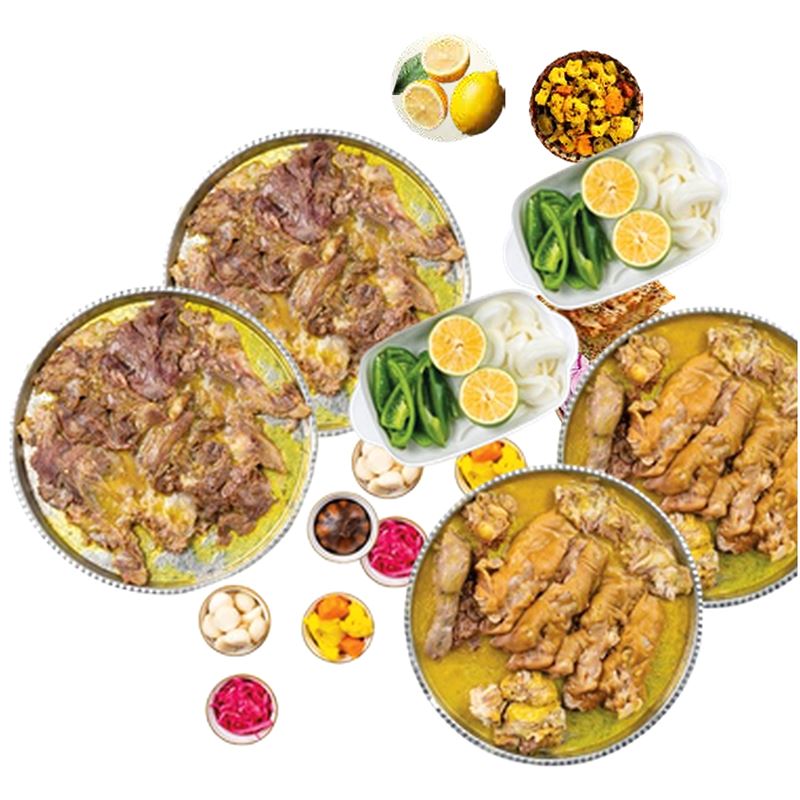
Reshteh polo is happy as a festive centrepiece with the date-and-raisin garnish, or as a side to a saucy khoresh, grilled kababs, or a simple herb platter and yogurt. It is very much a home dish for celebrations, and it is not something we cook — our kitchen is built around one thing done properly. So if the New Year mood strikes but you would rather not stand over a pot, let us take the long, slow cooking off your hands: we make Tehran-style kalle pache and rich broths, served with warm sangak, sharp torshi and a glass of doogh. Cook your reshteh polo for the family, then browse the menu and order page to round out the table — we deliver across all of Dubai, with the delivery fee shown by area at checkout and free on orders over AED 300, and we are open 24 hours — or reserve a table and let us do the slow cooking for once.
