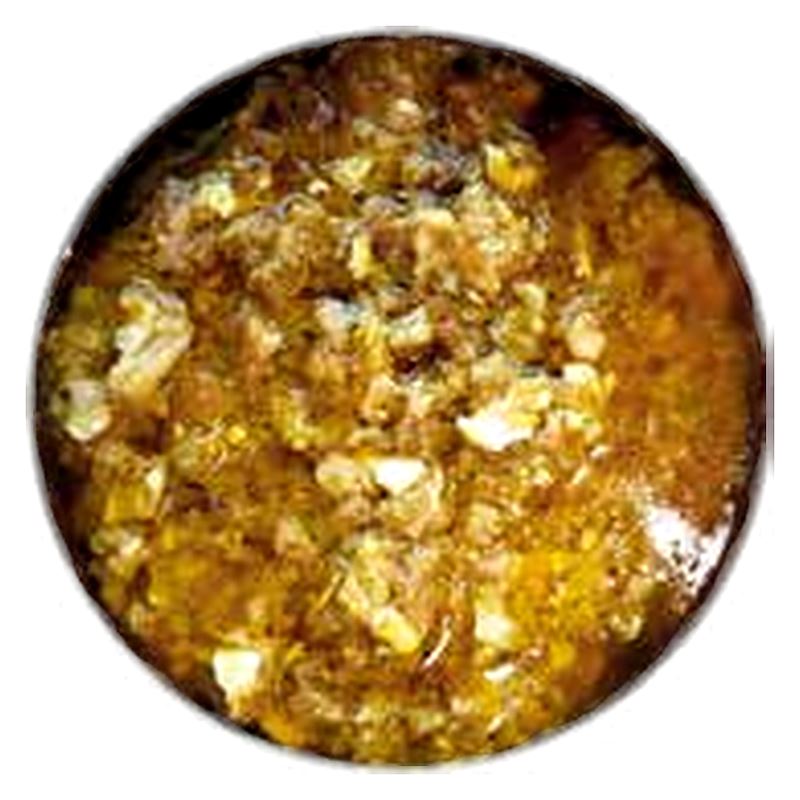
What is Persian saffron halva?
Persian halva (حلوا) is a soft, fudge-like sweet built from one humble ingredient — wheat flour — patiently toasted in butter until it turns deep gold and smells of toasted nuts, then bound with a hot saffron-and-rosewater syrup into a smooth, glossy paste. Pressed flat on a plate, scored with the back of a spoon and dusted with ground pistachio and coconut, it looks far more elaborate than its short shopping list suggests. It is one of those recipes where technique matters more than ingredients: master the toasting of the flour and you have mastered halva.
An honest note first: this is a home recipe. Our kitchen on Jumeira Street is a Tehran-style kalle pache house — we do not make or sell halva. We simply love it, and want to help you make it well at home.
Why is halva tied to gatherings and remembrance?
In Iran, halva carries meaning as well as flavour. It is the sweet most associated with remembrance — offered at memorials and on days of mourning, given as nazri (a vow-offering) and handed round to neighbours — yet it is equally at home as a comforting treat with afternoon tea. The saffron and rosewater are not just decoration; they are the perfume that makes a plate of halva feel like a special occasion, and the reason this simple sweet has stayed close to the heart of Persian hospitality for generations.
What ingredients do you need for Persian halva?
This makes one medium plate, enough to share among six to eight people with tea. Everything here is easy to find in Dubai.
- 1 cup (about 130 g) plain all-purpose flour
- 2/3 cup (about 150 g) butter — or half butter and half neutral oil for a lighter result
- 1 cup (200 g) sugar
- 1 cup (240 ml) water
- 1/2 teaspoon saffron threads, ground to a powder and steeped in 2 tablespoons hot water
- 3 tablespoons rosewater
- 1/4 teaspoon ground cardamom (optional)
- To garnish: 2 tablespoons finely ground pistachios and 1 tablespoon desiccated coconut
How do you make Persian halva step by step?
Set aside about 40 minutes and keep the heat low throughout — this is a recipe that rewards patience, not speed.
- First make the syrup so it is ready and hot. Bring the sugar and water to a gentle boil, stirring until the sugar dissolves, then simmer for 3 to 4 minutes. Take it off the heat and stir in the bloomed saffron, the rosewater and the cardamom. Keep it warm.
- In a wide, heavy pan, melt the butter over low heat. Add the flour and stir it in until you have a smooth, loose paste.
- Now toast, and keep stirring. Over low heat, move the flour constantly with a spatula or wooden spoon, scraping the base so nothing catches. Over 20 to 30 minutes the paste will pass from pale and raw-smelling to creamy, then to a deep golden brown that smells strongly of toasted nuts.
- When the colour is deep gold and the aroma is unmistakable, take the pan off the heat for a moment — this stops the syrup from spitting.
- Pour the hot syrup in slowly, a little at a time, stirring hard and without stopping. It will hiss and steam; keep stirring until every drop is absorbed and the mixture is smooth with no lumps.
- Return to low heat and stir for another 3 to 5 minutes, until the halva thickens, turns glossy and pulls away from the sides of the pan in a soft mass.
- Tip it onto a serving plate and, with the back of a wet spoon, press it into a flat round about 1.5 cm thick. Make the traditional pattern by pressing curved lines or a cross-hatch across the surface.
- Scatter the ground pistachio and coconut over the top while it is still warm so they stick, then let it cool to room temperature before slicing into small diamonds or wedges.
How do you know the flour is toasted enough?
This is the one step that decides whether your halva is silky and fragrant or pasty and raw-tasting. Colour and smell are your guides, not the clock. Use this table to read the stages.
| Stage | Look and smell | What to do |
|---|---|---|
| First 5 minutes | Pale, raw floury smell, butter foaming | Stir constantly; do not raise the heat |
| 10 to 15 minutes | Creamy to light gold, biscuity aroma | Keep the heat low and the stirring constant |
| 20 to 25 minutes | Deep golden brown, strong nutty smell, glossy loose paste | Ready — take off the heat and add the syrup |
| Gone too far | Dark brown or scorched flecks, acrid smell | Start again; a burnt taste cannot be fixed |
What are the most common halva mistakes?
Most failures come down to four causes. Heat too high burns the flour before it can toast; keep it low the whole way. Cold syrup added to hot flour seizes into lumps instantly, which is why we add the hot syrup gradually with the pan lifted off the heat for a moment. Rushing the toast leaves a flat, raw floury taste; give the stage its full time. And too little stirring lets the base catch and scorch, so never let the spoon stop moving.
How do you serve and store halva?
Serve halva at room temperature, cut into small diamonds, with a glass of Persian tea or after a meal. It is rich and energy-dense, so small pieces go a long way. This is general information about a sweet food, not medical or dietary advice; if you are managing your diet or health, please check with a doctor or dietitian. Halva keeps in a covered container at room temperature for two to three days, or up to a week in the fridge — bring it back to room temperature before serving so it softens and the aroma returns.
Would you rather we did the cooking?
Halva is a home project, and we hope yours turns out beautifully. What we do cook, around the clock, is Tehran-style kalle pache — at one kitchen, 64 Jumeira Street, Jumeirah 1, open 24 hours and delivering across all of Dubai, with delivery free over AED 300 and the delivery fee shown by your area at checkout. If a slow weekend morning calls for a warm bowl of broth, sangak and doogh instead of standing over the pan, browse our menu and order online or reserve a table. New to the dish? Our guide to what kalle pache is is a friendly place to start.
