What is Persian dolmeh, and how is it different from Arabic or Turkish stuffed leaves?
Dolmeh barg-e mo (Persian دلمه برگ مو) is the Iranian version of stuffed grape leaves: tender vine leaves wrapped around a green, herb-heavy filling of rice and yellow split peas — and, in most Tehran kitchens, a little ground meat — then simmered slowly and finished with a sweet-and-sour glaze. The word dolmeh comes from a Turkic root meaning "stuffed," and versions exist all across the region, but the Persian one has its own signature. Where Arabic warak enab leans on rice, tomato and a sharp hit of lemon, and Turkish yaprak sarma favours rice with pine nuts, currants and cinnamon served cold in olive oil, Persian dolmeh is defined by two things: a mountain of fresh chopped herbs, and that final balance of sour vinegar against sweet sugar, grape molasses or date syrup.
How does dolmeh barg-e mo compare to warak enab and yaprak sarma?
| Difference | Persian dolmeh | Arabic warak enab | Turkish yaprak sarma |
|---|---|---|---|
| Filling base | Rice + yellow split peas + heaps of herbs | Rice-led, tomato, sometimes lamb | Rice with pine nuts and currants |
| Signature flavour | Sweet-and-sour (vinegar + molasses) | Tangy, lemon-forward | Warm spice, cinnamon, olive oil |
| Meat | Often, a small amount | Sometimes | Usually meatless |
| Served | Warm, as a main or starter | Warm or room temperature | Cold |
What do you need to make Persian dolmeh at home?
This makes about 40 to 45 rolls — enough for 4 to 6 people. Everything is easy to find in Dubai: jarred grape leaves are in most supermarkets, and fresh ones turn up in spring.
- About 50 grape leaves (one 250 g jar in brine, or fresh leaves lightly blanched), plus a few torn leaves to line the pot
- 1 cup (200 g) white rice, rinsed and soaked for 30 minutes
- 1/2 cup (100 g) yellow split peas (lapeh)
- 250 g ground lamb or beef (optional — leave it out for a vegetarian dolmeh)
- 2 large onions, finely chopped
- Finely chopped herbs: 1 large bunch parsley (about 150 g), 1 bunch dill (about 100 g), 1 bunch mint (about 50 g, or 2 tbsp dried), a little tarragon, a little summer savory (marzeh) if you can find it, and 4–5 spring onions
- 2 tbsp tomato paste (optional)
- 1 tsp turmeric, 1/2 tsp cinnamon (optional), 1 tsp Persian advieh
- Salt and black pepper
- 4 tbsp oil or melted butter
For the sweet-and-sour cooking liquid: 2 cups water or light broth, 3 tbsp vinegar, 2 tbsp sugar or grape molasses (shireh-ye angur) or date syrup, the juice of half a lemon (optional), and a drizzle of oil.
How do you make Persian dolmeh, step by step?
- Parboil the split peas and rice. Boil the lapeh for 15–20 minutes until just tender but not mushy, then drain. Parboil the rice for 5–7 minutes until half-cooked, then drain. Half-cooking stops the filling from being raw on one hand and bursting the leaves on the other.
- Build the base. Soften the onions in oil until golden, add the meat and turmeric and cook until browned, then stir in the tomato paste for a minute.
- Mix the filling. Combine the onion and meat with the drained rice and split peas, all the chopped herbs, the advieh and cinnamon, and salt and pepper. It should look overwhelmingly green — that abundance of herbs is the soul of Persian dolmeh.
- Prepare the leaves. If jarred, rinse and soak in warm water to draw out the salt; if fresh, blanch for a minute or two until pliable. Snip off any tough stems.
- Roll each one. Lay a leaf shiny-side down, matte-side up, stem end towards you. Place about 1 tsp to 1 tbsp of filling near the stem, fold the stem end over it, fold in both sides, then roll away from you into a snug cigar — not over-filled and not over-tight, because the rice needs room to swell.
- Line and pack the pot. Line the base with torn leaves or slices of potato. Pack the rolls seam-side down, tightly in layers so they can't unravel.
- Add the liquid and a weight. Whisk the water or broth with the vinegar, sugar or molasses, lemon and oil, and pour it over until it reaches the top of the rolls. Set an inverted heatproof plate on top to hold them down.
- Simmer gently. Cover, bring to a gentle boil, then lower the heat and cook for 60–90 minutes until the rice is fully cooked, the leaves are silky, and most of the liquid has reduced to a glossy glaze. Let it rest for 10 minutes before lifting the dolmeh out.
How do you roll a grape leaf so it doesn't burst?
The secret is snug, not tight, with a little room for the rice to expand. Always keep the seam underneath, pack the rolls right up against each other, and hold them down with a heavy plate. A roll that is too tight will split as the rice swells; one that is too loose will unravel into the broth.
How do you get the sweet-sour balance right?
Taste the cooking liquid before you pour it in: it should hit sour first, then be rounded off by the sweetness. Start with a ratio of about 3 parts vinegar to 2 parts sugar or molasses and adjust from there. Grape molasses gives a deeper, fruitier background than sugar alone, while too much sugar tips the whole pot into cloying.
What are the most common dolmeh mistakes?
- Overfilling — the rice swells and bursts the leaf.
- Skipping the parboil — the filling stays raw or over-swells.
- Packing too loosely — the rolls unravel as they cook.
- Skimping on herbs — the dolmeh loses its Persian identity.
- Cooking without a weight — the rolls float and come apart.
What do you serve dolmeh with — and who cooks it if you'd rather not?
Serve Persian dolmeh warm, as a main or a starter, with warm sangak bread, thick yogurt and a spoonful of torshi on the side. If you want to explore Persian dishes beyond the soup pot, our guide to Persian food opens plenty of doors.
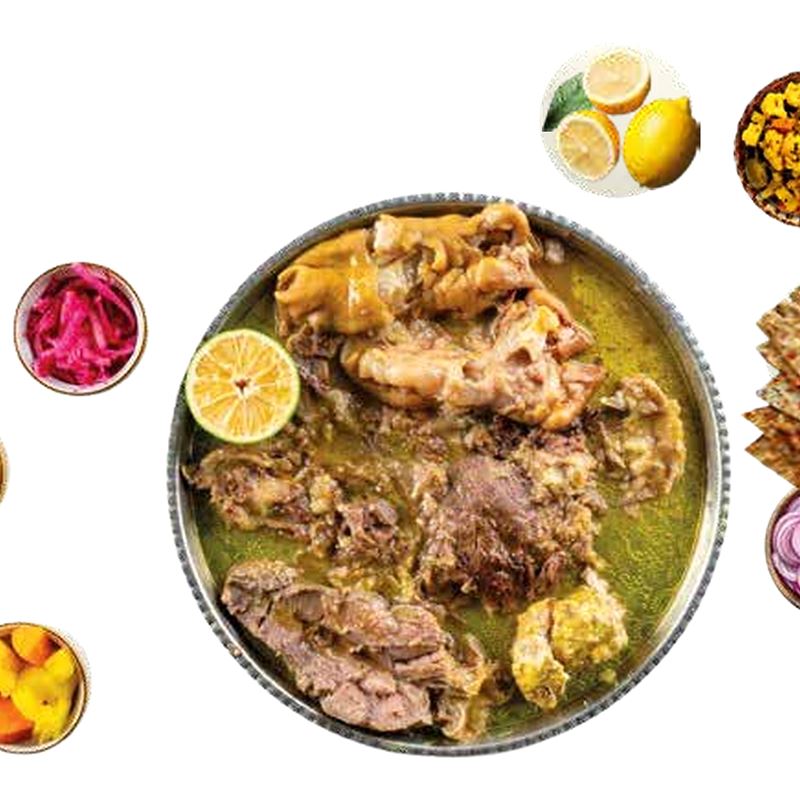
And to be honest: we are a Tehran-style kalle pache kitchen, and dolmeh is not on our menu — this is a home recipe we are sharing, not something we cook. But if you would rather not roll grape leaves tonight, you can order kalle pache from us with sangak, doogh and torshi, delivered across Dubai around the clock with free delivery over AED 300, or reserve a table at our Jumeirah 1 kitchen.
